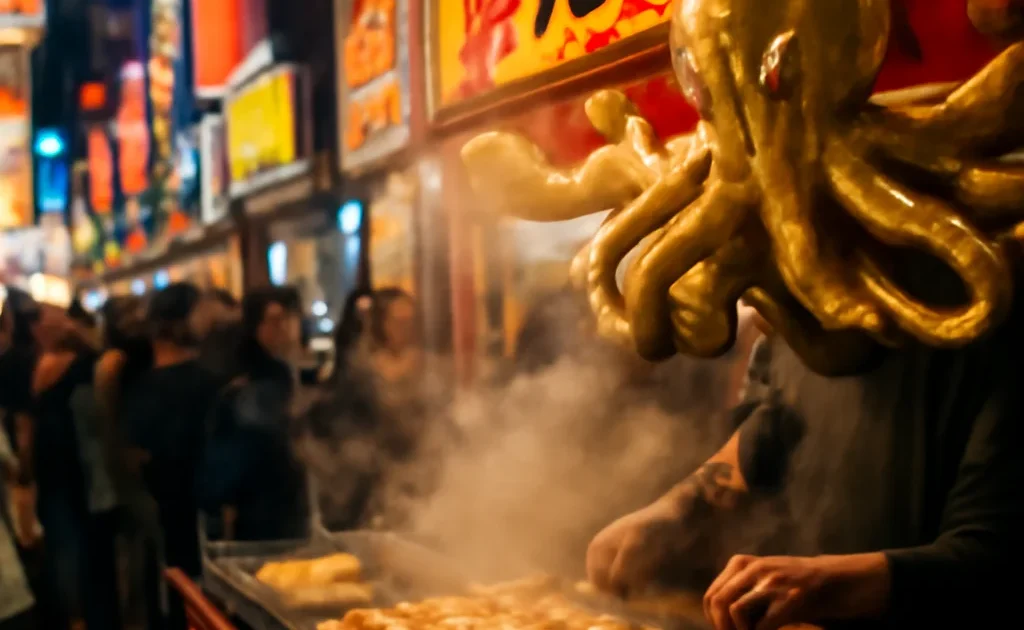
The Best Japan Street Foods
Takoyaki (たこ焼き)
The food: Golf ball-sized batter rounds cooked in special cast iron pans with round cells. Each ball contains a piece of octopus (tako). Topped with bonito flakes (katsuobushi), Japanese mayo, and sweet takoyaki sauce.
Where: Osaka (Dotonbori is the heartland), Asakusa in Tokyo, festivals everywhere.
The spectacle: Watch the vendors use metal picks to rotate each ball precisely at the right moment. It’s a skill.
Price: ¥500–700 for 6–8 pieces.
Best spots: Wanaka (Dotonbori, Osaka), street stalls at Senso-ji (Asakusa), any matsuri festival.
Yakitori (焼き鳥)
The food: Chicken skewers grilled over charcoal. Every part of the chicken: breast (mune), thigh (momo), skin (kawa), heart (hatsu), liver (reba), cartilage (nankotsu). Seasoned with salt (shio) or sweet tare sauce.
Where: Yurakucho (Tokyo) — underneath the train tracks, dozens of cramped yakitori stalls. Omoide Yokocho (Memory Lane), Shinjuku.
Price: ¥120–250 per skewer.
Taiyaki (たい焼き)
The food: Fish-shaped waffle cake filled with traditional azuki (red bean) paste or modern fillings (custard, chocolate, sweet potato, matcha).
Where: Everywhere in Japan — outside temples, in shopping arcades, festival stalls.
Price: ¥150–250.
Crepes (Harajuku-style)
Not traditional Japanese food but a Tokyo institution. Large crêpes filled with elaborate combinations: strawberries, cream, ice cream, matcha, azuki beans, chocolate, fresh fruit.
Where: Takeshita Street, Harajuku. Also in other tourist areas.
Price: ¥500–800.
Kakigori (かき氷)
The food: Finely shaved ice topped with flavored syrups — matcha, strawberry, melon, condensed milk. The high-end version uses natural flavored syrups, not artificial.
When: Summer (June–August). Found everywhere in hot weather.
Price: ¥300–800.
Corn (Yaki-tomorokoshi)
Grilled corn brushed with soy sauce and butter. Simple, delicious, quintessentially Japanese summer festival food.
Where: Summer festivals (matsuri), Hokkaido specifically.
Price: ¥300–500.
Imagawayaki / Obanyaki
Round cakes similar to taiyaki but thicker. Filled with sweet azuki, custard, or cheese.
Where: Temple approaches, covered shopping arcades.
Price: ¥150–250.
Ikayaki (いか焼き)
Grilled whole squid on a skewer, basted with soy sauce. Osaka-style ikayaki is slightly different — a squid-filled flat cake.
Where: Festival stalls, coastal areas.
Price: ¥500–700.
—
Best Street Food Markets and Areas
Tsukiji Outer Market, Tokyo
The best morning street food experience in Japan. The inner fish market moved to Toyosu but the outer market remains active.
What to eat: Sushi (from ¥150/piece at standing bars), tamagoyaki (rolled egg), fresh oysters, grilled seafood on skewers, street crab.
When: Open from 5am. Best 7–10am.
Nishiki Market, Kyoto
Kyoto’s “kitchen” — narrow covered arcade with 170+ stalls over five blocks.
What to eat: Pickled vegetables (tsukemono), fresh tofu, grilled mochi on sticks, matcha sweets, fresh seafood, Kyoto-style rolled egg.
When: Open 9am–6pm most stalls.
Kuromon Ichiba Market, Osaka
Osaka’s fresh food market. More oriented toward wholesale but visitors welcome.
What to eat: Wagyu beef skewers, fresh oysters, fugu (pufferfish), grilled scallops.
When: Open from 8am. Best before noon.
Nakamise Shopping Street, Asakusa (Tokyo)
The approach to Senso-ji Temple lined with over 80 stalls and shops.
What to eat: Ningyo-yaki (small cakes filled with azuki), senbei (rice crackers made fresh), agemanju (deep-fried mochi), soft serve ice cream.
Festival Stalls (Yatai)
Japan’s matsuri festivals are the peak street food experience. Stalls run the full circuit: takoyaki, yakitori, yakisoba, goldfish scooping, water balloon fishing.
Major summer festivals (July–August): Gion Matsuri (Kyoto, July), Sumida Fireworks (Tokyo, July), Awa Odori (Tokushima, August).
—
Street Food Etiquette
Standing and walking: Eating while walking (aruki-gui) is considered impolite in Japan except in designated areas like market food stalls. Eat standing at the stall or find a bench.
Rubbish: There are almost no public bins in Japan. Carry your rubbish with you or return packaging to the vendor.
Cash: Most street food is cash only. Always carry small denomination notes and coins.
—
Guided street food tours of Tsukiji Market, Dotonbori and Nishiki Market give you context and take you to spots you’d never find alone. Book ahead for weekend dates.
Book Japan street food tours on Klook →
* Affiliate link — we may earn a small commission at no extra cost to you.
Related Guides
Plan Your Trip
- 🎫 Tours & activities — KKday
- 🏨 Hotels — EconomyBookings
- 🚕 Airport transfer — Welcome Pickups
- 📱 eSIM & SIM card — Airalo
- 🚗 Car & scooter rental — Localrent
- ✈️ Flights — Kiwi.com