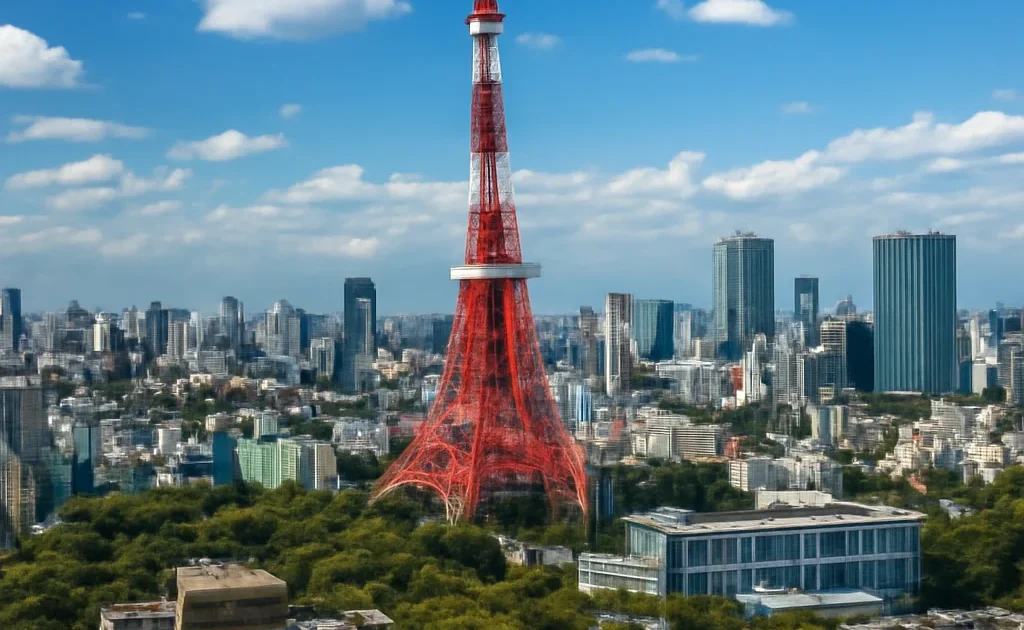
When I first arrived in Tokyo, I stood outside Shinjuku Station with my backpack and a printed map and felt — for the first time in years of travel — genuinely overwhelmed. Not scared. Just small. The station alone has over 200 exits. The city stretches in every direction with no obvious center, no single landmark to orient yourself by. It hums with a particular energy: not aggressive, not chaotic, just relentlessly, efficiently alive.
That was almost a decade ago. I’ve been back more times than I can count now, and Tokyo has become the city I think about more than any other. Here’s what I’d tell myself on that first day.
Getting In From the Airport
I didn’t know that Narita Airport — despite having “Tokyo” in its name — is actually about 60km outside the city. The fastest way in is the Narita Express (N’EX), which takes about 50 minutes to Shinjuku and is covered by the JR Pass if you have one. The Limousine Bus is slower but drops you closer to many hotels if you’re staying in areas like Asakusa or Akihabara.
Haneda is much closer — 30 minutes by monorail or train — and if you have a choice of airports, Haneda wins easily. I always try to route through Haneda now.
The moment you land, buy a Suica card. It’s a rechargeable IC card that works on every train, subway, bus, and most convenience stores in Japan. Load ¥3,000–5,000 on it and forget about buying individual tickets. It is the single best thing you can do for your first day.
Understanding the City’s Neighborhoods
Tokyo isn’t a city you see — it’s a collection of villages you explore. Each neighborhood has a completely different personality, and the city rewards wandering far more than ticking off attractions.
Shinjuku is loud, neon-lit, and inexhaustible. The east side has Kabukicho — Japan’s famous entertainment district, slightly seedy, fascinating at night with the red lanterns and the hosts in expensive suits calling out from doorways. The west side has skyscrapers and the Tokyo Metropolitan Government Building, which has a free observation deck with views that stop you mid-sentence on a clear day.
Asakusa is old Tokyo — the smell of incense drifting from Senso-ji temple, the wooden stalls selling ningyo-yaki cakes shaped like little doves, the rickshaw drivers waiting by the Kaminarimon gate. I always take visitors here first. It’s the city that existed before the concrete and glass, and something about it still feels alive.
Shimokitazawa is where I go when I need a break from tourism. A neighborhood of second-hand clothing stores, tiny live music venues, curry restaurants with handwritten menus, and locals who clearly have no interest in being in a travel guide. The streets are too narrow for cars. It smells of coffee and old books. I’ve spent whole afternoons there without seeing another tourist.
The Thing Guidebooks Get Wrong
Every Tokyo guide tells you to go to Shibuya Crossing. And you should — it’s genuinely impressive, hundreds of pedestrians moving in every direction at once while giant screens flash above. But guidebooks always frame it as a spectacle to watch from above. The real experience is being in it. Stand in the middle during a green light and let it move around you. That’s Tokyo: not something you observe from a safe distance, but something you step into.
Guidebooks also massively oversell the Tokyo Skytree and undersell the simple pleasure of just walking. Some of my best Tokyo memories are completely unplanned: stumbling across a tiny shrine tucked between office buildings, following the smell of grilling meat to a standing yakitori bar where no one spoke English and somehow a beer and six skewers arrived in front of me anyway, finding a used bookstore in Jimbocho with English paperbacks stacked to the ceiling.
A Mistake That Taught Me Something
My first trip I tried to do too much. I had a list of 15 things to see across the city and spent most of my time on trains between them, stressed about the schedule. I saw a lot and experienced almost nothing.
The trip that changed everything was the one where I picked two neighborhoods a day and just walked. I got genuinely lost in the residential streets behind Yanaka, a neighborhood that survived the war and still has wooden houses and cats sleeping on walls and old women tending tiny gardens. The light in the late afternoon came through the trees in a way that felt like the city was showing me something it doesn’t usually show visitors.
Give yourself permission to go nowhere in particular. Tokyo rewards it.
Food: Where to Start
Eat at a convenience store on your first night. I know that sounds like bad advice, but 7-Eleven in Japan is legitimately good — the onigiri are fresh, the hot foods surprising, and standing in a brightly lit konbini at midnight trying to figure out which rice ball to eat is a very particular Tokyo experience that I love.
After that: find a ramen shop that has a vending machine at the entrance (you buy a ticket for your order before sitting down), take the ticket to the counter, and eat the best bowl of noodles you’ve ever had in your life. The broth will be rich and slightly smoky. The noodles will have just the right resistance. You will want another bowl immediately.
My honest tip: block out your last afternoon in Tokyo with nothing planned. No museum, no attraction, no restaurant reservation. Just walk out of your hotel and follow whatever looks interesting. Tokyo has given me its best moments when I stopped trying to find them.
Plan Your Trip
- 🎫 Tours & activities — Klook
- 🏨 Hotels — EconomyBookings
- 🚕 Airport transfer — Welcome Pickups
- 📱 eSIM & SIM card — Airalo
- 🚗 Car & scooter rental — Localrent
- ✈️ Flights — Kiwi.com