Best Time to Visit Kyoto
Spring (late March – early April): Cherry blossoms. The most beautiful season. Also the most crowded and expensive. Book accommodation 6–12 months ahead.
Autumn (mid-November): Maple season (koyo). Equally beautiful, slightly less crowded than spring. Still book ahead.
Summer (June–August): Hot and humid (30–35°C). Rainy season in June. Gion Matsuri festival in July is spectacular. Fewer Western tourists, more domestic visitors.
Winter (December–February): Cold but beautiful. Snow on temple roofs is extraordinary. Crowds are lowest. Some outdoor attractions less pleasant in rain/cold.
—
Top Things to Do in Kyoto
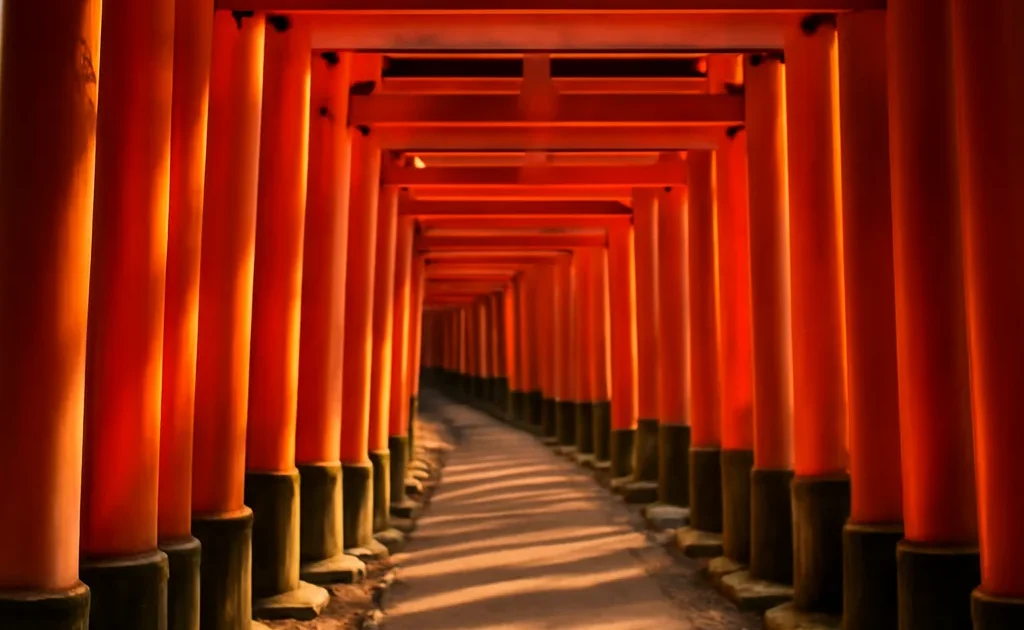
Fushimi Inari Taisha
The mountain shrine with thousands of vermillion torii gates winding up through forest. Japan’s most Instagrammed location — for good reason.
The secret: Go before 7am. The lower section (which fills the photographs) is peaceful and beautiful. The full hike to the summit takes 2–3 hours round trip. Higher up you’ll find small shrines, fox statues, and virtually no tourists.
Free entry, open 24 hours.
Arashiyama Bamboo Grove
A 500-meter path through towering bamboo — when the wind blows it creates an otherworldly sound.
The reality: From 9am it’s extremely crowded — shoulder to shoulder tourists and rickshaws.
The solution: Arrive before 7:30am. The bamboo in early morning light with no crowds is one of Japan’s great experiences.
Combine with: Tenryu-ji Temple garden (¥500–700 depending on access level), Okochi Sanso Villa (¥1,000 but beautiful), monkey park.
Philosopher’s Path (Tetsugaku no Michi)
A 2km canal walk named after the philosopher Nishida Kitaro who meditated here daily. Lined with cherry trees (spectacular in April) and maple trees (spectacular in November). Connects Ginkakuji (Silver Pavilion) to Nanzen-ji.
Best time: Early morning, any season.
Kinkaku-ji (Golden Pavilion)
The most famous image of Kyoto — three-story Zen temple pavilion completely covered in gold leaf, reflected in a still pond. Always crowded, never disappoints.
Go early (opens 9am), weekdays are calmer. Allow 30–45 minutes.
Gion District
Kyoto’s traditional geisha district. The main street (Hanamikoji-dori) is lined with ochaya (teahouses) behind wooden lattice facades. Wander at dusk for the highest chance of spotting a geiko (Kyoto geisha) or maiko (apprentice).
Photography note: Photographing geisha without permission has become a serious local issue. Respect their privacy — don’t chase or block them.
Nishiki Market
Kyoto’s narrow covered food market — five blocks, hundreds of stalls. The “Kyoto Kitchen.” Try: pickled vegetables (tsukemono), fresh tofu, grilled mochi, matcha sweets, fresh seafood.
Ryoan-ji
Japan’s most famous rock garden — 15 stones arranged in raked gravel. From whichever angle you view it, one stone is always hidden. A UNESCO World Heritage Site and a genuine Zen experience.
Nijo Castle
17th-century shogun castle with “nightingale floors” (uguisubari) — floorboards engineered to squeak as an intruder alarm. Elegant painted screens, expansive gardens, extraordinary preservation.
Kiyomizudera
Hillside temple with a famous wooden veranda extending over a 13-meter drop without using a single nail. Views over Kyoto. Best in cherry blossom season and autumn. Gets extremely crowded — go early or at dusk.
—
Kyoto Neighborhoods
Higashiyama
The most tourist-heavy district. Narrow stone-paved lanes (Ninenzaka and Sannenzaka) lined with souvenir shops and traditional buildings. Leads up to Kiyomizudera. Beautiful but crowded.
Gion
The geisha district. More atmospheric than Higashiyama, especially at night.
Arashiyama
Bamboo grove, temples, river, monkey park. Western Kyoto. A half-day or full-day destination.
Fushimi
South Kyoto. Fushimi Inari Shrine and Fushimi sake breweries (Gekkeikan is open to visitors).
Nishijin
Traditional weaving district. Nishijin Textile Center shows traditional kimono weaving demonstrations. Less touristy, authentic Kyoto daily life.
—
Where to Stay in Kyoto
Best Areas
Gion / Higashiyama: Walking distance to major temples. Most atmospheric. Most expensive.
Kyoto Station area: Convenient for Shinkansen and buses everywhere. Less atmospheric but practical.
Downtown (Kawaramachi/Gion-Shijo): Best access to restaurants, shops, and nightlife. Good mid-range options.
Accommodation Types
Ryokan: The quintessential Kyoto experience. Tatami rooms, futon beds, yukata robes, multi-course kaiseki dinner. Budget ¥20,000–80,000+ per person including dinner. Book months ahead for peak seasons.
Machiya (townhouse): Restored traditional townhouses rented as vacation homes. Sleep like a local. Available through Airbnb and specialist agencies.
Business hotels: Excellent value around Kyoto Station (Dormy Inn, Toyoko Inn).
—
Getting Around Kyoto
Buses: The primary way to get between major temples. IC Card (Suica) works. Day pass (¥700) is worth it if doing more than 3 bus rides.
Bicycle rental: Kyoto is extremely cycling-friendly. Many shops near Kyoto Station rent bikes for ¥1,000–1,500/day. The best way to explore at your own pace.
Taxi: More expensive than buses but faster for direct routes. Useful for early morning temple visits.
Subways: Two lines but limited coverage of tourist areas.
Walk: Many temple clusters (Higashiyama, Arashiyama) are best explored on foot.
—
Kyoto Food Guide
Kaiseki: Kyoto’s refined multi-course cuisine emphasizing seasonal ingredients and presentation. Budget ¥8,000–30,000+ per person.
Tofu: Kyoto is Japan’s tofu capital. Yudofu (simmered tofu) is a local specialty.
Matcha: Uji (30 minutes from Kyoto) is Japan’s premier matcha-producing region. Matcha everything — soba, ice cream, parfaits, Kit Kats.
Obanzai: Kyoto’s everyday home cooking — small dishes of pickled vegetables, simmered tofu, grilled fish.
Nishiki Market: Best place for food browsing and trying Kyoto specialties.
—
Geisha dining experiences, sake brewery tours, and guided temple tours in Kyoto book out weeks ahead during cherry blossom and autumn seasons.
Book Kyoto tours & experiences on Klook →
* Affiliate link — we may earn a small commission at no extra cost to you.
Related Guides
- Kyoto itinerary 3 days
- Best time to visit Japan
- Japan itinerary 2 weeks
- Where to stay in Kyoto
- Osaka travel guide
Plan Your Trip
- 🎫 Tours & activities — KKday
- 🏨 Hotels — EconomyBookings
- 🚕 Airport transfer — Welcome Pickups
- 📱 eSIM & SIM card — Airalo
- 🚗 Car & scooter rental — Localrent
- ✈️ Flights — Kiwi.com