I’ve been to Japan in every season now, and every single time someone asks me “when should I go?” I pause before answering. Because the honest answer is: it depends on what you can handle — and what you’re actually chasing.
Let me tell you what I’ve learned across those trips, starting with the mistake that cost me the most.
The Cherry Blossom Trap
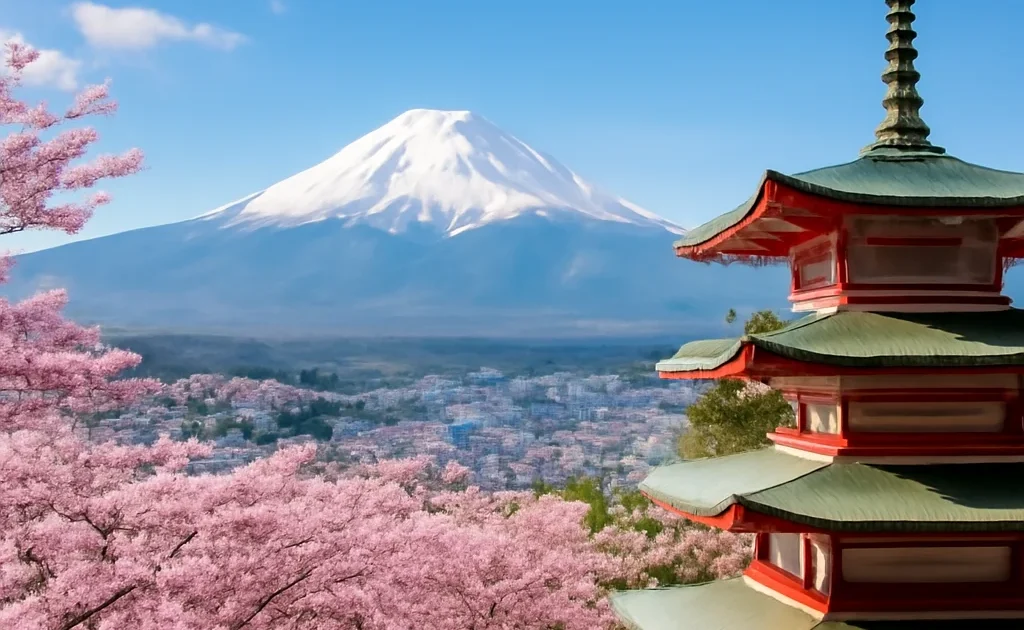
My first trip to Japan was timed perfectly around cherry blossom season. I’d been planning it for a year, tracking forecast websites obsessively, and I landed in Tokyo in late March feeling like I’d cracked the code. What I hadn’t planned for was the crowds. Not tourist crowds — I expected those. I mean the sheer, overwhelming, shoulder-to-shoulder mass of people that descends on parks like Shinjuku Gyoen and Ueno during peak bloom. I couldn’t find a spot to sit. Convenience store onigiri had sold out by 10am. My “peaceful picnic under cherry blossoms” became a survival exercise in not losing my friend in the crowd.
The blossoms themselves were extraordinary. Pink and weightless, drifting down onto the path like something from a film you can’t quite remember. The smell of food carts and warm air and something faintly sweet. Worth it? Absolutely. Worth planning your entire trip around? Only if you’re prepared for what comes with it.
Sakura season runs roughly late March to mid-April, but it shifts every year. Tokyo tends to peak earlier than Kyoto by about a week, and the timing can vary by 10 days depending on the winter. Don’t book non-refundable hotels until the forecasts firm up in February.
Autumn Is the Secret Season
Here’s what I think guidebooks underrate: autumn. The koyo — Japanese autumn foliage — is, in my opinion, more beautiful than cherry blossoms and dramatically less crowded. I visited Kyoto in mid-November once and genuinely teared up walking through Eikan-do at dusk, the maple leaves burning orange and red against the stone lanterns, the air cold enough to see my breath. There were other visitors, yes, but I could actually stop and look.
Autumn runs from late October through December depending on the region and altitude. Hokkaido turns first, then Tohoku, then the main island works its way south. This staggered timing means you can chase the foliage if you plan your route right.
The temperatures are perfect for walking — cool enough to be comfortable, warm enough to not need a heavy coat until November. Hotels are slightly cheaper than during cherry blossom season. The food is extraordinary: matsutake mushrooms, sweet potatoes roasted on street corners, warm sake in izakayas while rain taps on the paper screens outside.
Summer: Hot, Humid, and Underrated
Summer in Japan — June through August — is genuinely tough if you’re not prepared for it. The rainy season (tsuyu) hits in June and lasts three to four weeks, bringing muggy, grey days that fog up your glasses when you step outside. Then July and August arrive and the heat becomes serious. I’m talking 35°C with humidity that makes it feel like 40. I walked around Osaka one August afternoon and my shirt was soaked through within twenty minutes.
And yet — I don’t entirely regret it. Summer is matsuri season. The fireworks festivals (hanabi taikai) are spectacular: I watched one from a bridge over the Sumida River, the explosions reflecting on the water, the crowd in yukata around me, the smell of yakitori and sunscreen mixing in the warm night air. If heat doesn’t bother you and you time it around a festival, summer can be magical. Just stay hydrated, carry a small towel, and accept that you will sweat.
Winter Is Underappreciated
Winter — December through February — is my dark horse recommendation for first-timers who want to actually see the country rather than photograph it. The crowds thin dramatically after New Year’s. Prices drop. Temple gardens look haunting and still under grey skies. If you catch a rare snowfall in Kyoto, the whole city goes silent in a way that feels almost sacred.
I didn’t know that many of Japan’s famous outdoor attractions are actually more accessible in winter precisely because the queues disappear. I walked up to Fushimi Inari at dawn on a January morning with almost no one around me. Just the sound of my footsteps on the stone path, the faint smell of incense from the shrine buildings, and thousands of torii gates disappearing into the mist above me. That memory is worth more to me than any crowded cherry blossom photo.
The trade-off is cold — Tokyo in January averages around 5°C, Kyoto a touch colder. Pack properly and it’s manageable.
So When Should You Actually Go?
If this is your first trip and you’re flexible: aim for early November. The autumn colors are beginning, the weather is mild, crowds are thinner than spring, and you’ll have the country close to its best without paying peak-season prices for every hotel.
If you’re set on cherry blossoms: go for it, but book everything three to four months early, stay somewhere outside central Tokyo if you can, and visit the famous parks on weekday mornings if possible.
If budget matters most: January and February are your months. Dead quiet, genuinely beautiful in a spare, wintry way, and you’ll find hotel rates you’d never see in spring.
The tip I give everyone: whatever season you choose, build in one more day than you think you need. Japan always finds a way to offer you something unexpected on the days you weren’t planning for anything.
Plan Your Trip
- 🎫 Tours & activities — Klook
- 🏨 Hotels — EconomyBookings
- 🚕 Airport transfer — Welcome Pickups
- 📱 eSIM & SIM card — Airalo
- 🚗 Car & scooter rental — Localrent
- ✈️ Flights — Kiwi.com