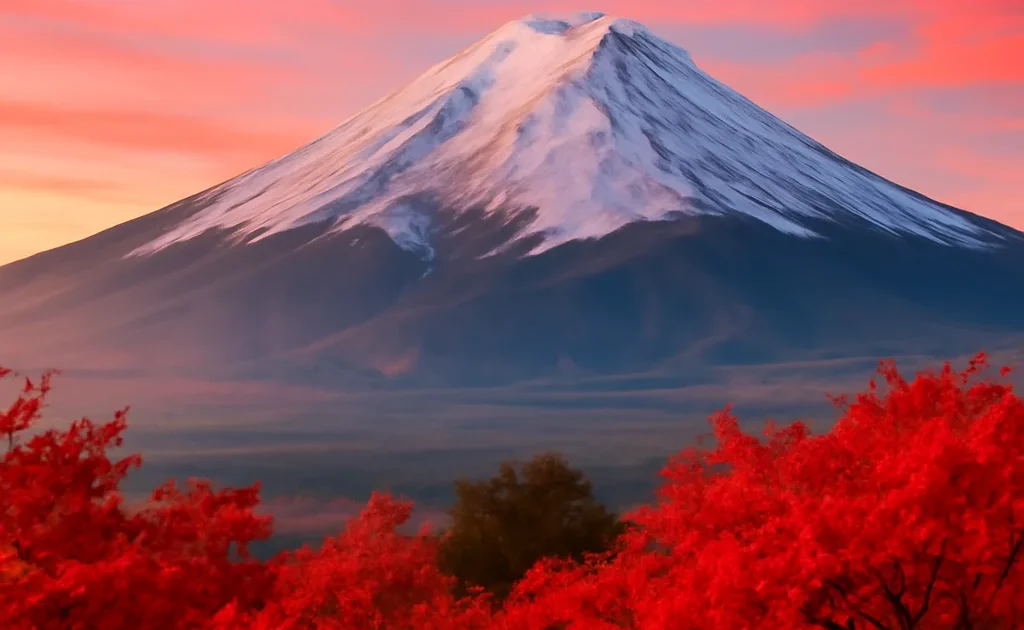
Best Viewpoints: Where to See Mount Fuji
Lake Kawaguchi (Kawaguchiko) — Best Overall
The most accessible and most photographed lake in the Fuji Five Lakes area. The classic “inverted Fuji” reflection is taken here.
Best spots:
- Kawaguchiko Music Forest side of the lake — best reflection photos
- Chureito Pagoda — the famous five-story pagoda with Fuji behind it (climb 400 stairs — worth it)
- Kawaguchi Asama Shrine lakeside — beautiful morning light
Hakone
From various points in Hakone (especially Lake Ashi and the Owakudani ropeway), Fuji views are excellent and the surrounding scenery adds depth.
From the Shinkansen
The clearest view of Mount Fuji from the Tokaido Shinkansen is between Shin-Fuji and Shizuoka stations. Sit on the right side (when traveling from Tokyo to Osaka). Best visibility in morning on clear days.
From Tokyo
On very clear days (typically December–February), Mount Fuji is visible from Tokyo. Tokyo Skytree observation deck and the Bunkyo Civic Center observation floor (free) both offer views when conditions are right.
—
When Can You See Mount Fuji?
Best visibility: November–February. Cold, dry air means the clearest views. Snow on the summit makes it most photogenic.
Worst visibility: June–August (rainy season and summer humidity). The mountain is frequently hidden in cloud even from nearby viewpoints.
Cherry blossom season (late March–early April): Fuji with cherry blossoms in the foreground is extraordinary — but visibility is hit-or-miss.
Rule of thumb: Morning views are better. By afternoon clouds often gather around the summit.
—
Climbing Mount Fuji
Climbing Season
Official season: July 1 – September 10 (approximately).
Outside this season, facilities (mountain huts, toilets, emergency services) are closed and trails may be snow-covered. Climbing outside season is possible but strongly discouraged and increasingly restricted.
The Trails
Yoshida Trail (5th Station): Most popular. Starts at Fuji Subaru Line 5th Station (2,305m). The trail to the summit takes 5–7 hours up, 3–5 hours down. Steepest but most facilities.
Fujinomiya Trail: Second most popular, starts higher (2,400m). Shorter but steeper.
Gotemba Trail: Longest, least crowded. Best descent option (giant sand/gravel slope allows fast descent).
How Hard Is It?
Harder than it looks. The altitude causes headaches and fatigue in many climbers — proper acclimatization matters. The trail itself is not technically difficult (no climbing equipment needed) but it’s long and steep. Around 300,000 people climb it each year.
Physical preparation: Regular walking and stair climbing for 4–6 weeks before helps.
The Overnight Strategy
Most climbers ascend overnight to reach the summit at sunrise (goraiko). Widely considered the best experience.
- Leave 5th Station at 8–9pm
- Climb through the night (bring headlamp, warm layers)
- Reach summit around 4–5am
- Watch sunrise
Mountain huts along the route offer beds (¥7,000–10,000, book months ahead for July–August), warm food, and oxygen canisters.
What to Wear and Bring
Essential:
- Warm waterproof jacket (summit temperature can be 5–10°C even in August)
- Headlamp + spare batteries
- Walking poles (help on descent, rentable at 5th Station)
- Water (2 liters minimum — available to buy at mountain huts at high prices)
- Rain gear
Don’t forget: Altitude sickness pills are available over the counter in Japan (diamox requires prescription)
Getting to 5th Station
From Tokyo: Highway bus from Shinjuku to Fuji Subaru Line 5th Station (2.5 hours, ¥2,800 each way). Runs only during climbing season.
From Kawaguchiko: Fuji Subaru Line shuttle bus (50 minutes, ¥1,540 each way). Private cars restricted during peak season (July–August).
—
Fuji Five Lakes Area
The five lakes (Kawaguchiko, Yamanakako, Saiko, Shojiko, Motosuko) surrounding Mount Fuji offer varying Fuji views and activities.
Kawaguchiko: Most accessible, most developed, best overall.
Yamanakako: Largest lake, closest to Tokyo, watersports.
Motosuko: Best western view of Fuji (the classic ¥1,000 note view), least crowded.
The area can be explored by bicycle (rental available), car, or limited buses.
—
Getting to Kawaguchiko from Tokyo
Highway bus from Shinjuku: ¥2,000 each way, 2 hours. Most convenient option.
JR + Fuji Excursion Limited Express: From Shinjuku, 1h40m. ¥4,150 each way.
JR Pass users: Take Shinkansen to Mishima or Shin-Fuji, then local bus. Adds time but covered by pass.
—
Guided climbing tours include transport from Tokyo, equipment guidance and an experienced guide — ideal for first-time climbers. Book months ahead for July-August.
Book Mount Fuji day trips & guided climbing tours on Klook →
* Affiliate link — we may earn a small commission at no extra cost to you.
Related Guides
- Best day trips from Tokyo
- Hakone day trip guide
- Japan itinerary 2 weeks
- Best time to visit Japan
- Japan on a budget
Plan Your Trip
- 🎫 Tours & activities — KKday
- 🏨 Hotels — EconomyBookings
- 🚕 Airport transfer — Welcome Pickups
- 📱 eSIM & SIM card — Airalo
- 🚗 Car & scooter rental — Localrent
- ✈️ Flights — Kiwi.com