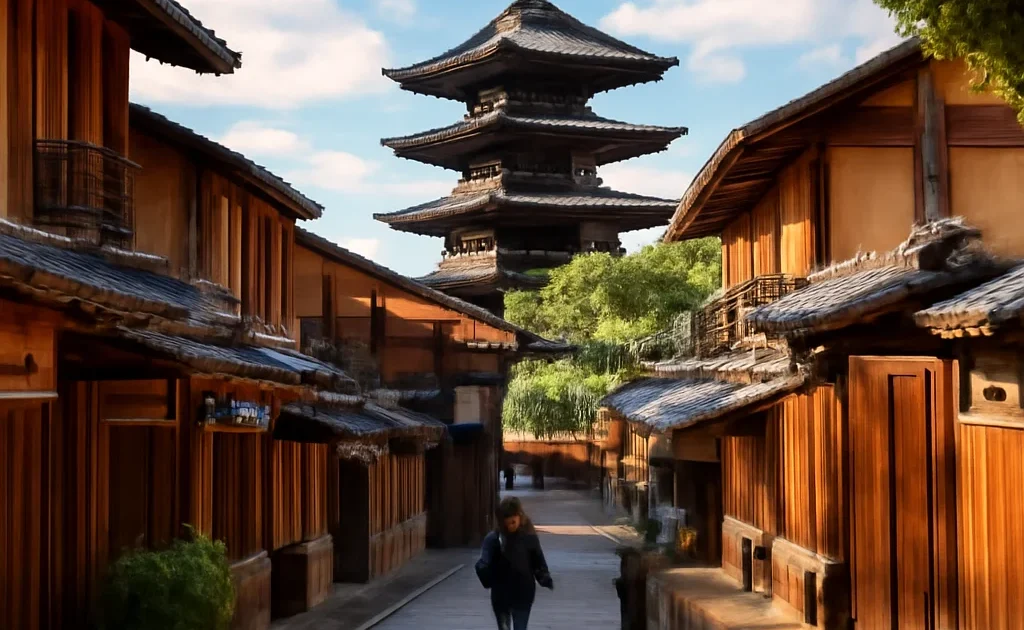
Kyoto is the city that made me fall in love with Japan, and also the city that has frustrated me more than anywhere else on earth. Both of those things are true, and understanding why will make your trip better.
I first visited on a three-day side trip from Osaka, convinced I could “do” Kyoto in that time. I rushed between the famous sites, queued for photos at Fushimi Inari, pressed through the crowds at Arashiyama, and left feeling vaguely cheated — like I’d seen the packaging but not the thing itself. It took a second, slower trip to understand what Kyoto actually asks of you.
What Kyoto Is Really Like
The city doesn’t announce itself the way Tokyo does. Arriving by shinkansen, you step out into a station that’s modern and slightly generic, surrounded by department stores. Nothing about it screams “ancient capital.” The magic is distributed across the city in pockets — temple gardens, stone-walled alleys, the sudden smell of incense on a street corner — and you have to slow down enough to find it.
The best mornings I’ve had in Kyoto started before 7am. The city at that hour belongs to monks, elderly locals doing tai chi in shrine courtyards, and the occasional deer wandering out of the hills. The light is different — softer, almost golden — and the famous sites are navigable. I walked the entire Fushimi Inari path alone at dawn one February morning, two hours through orange torii gates winding up the mountain, the only sounds my footsteps and birds in the cedar trees above. That is the real Fushimi Inari. The one at 10am, packed with tour groups taking the same photo at the same gate, is a different place entirely.
The Neighborhoods Worth Your Time
Gion is the geisha district, and yes, it lives up to its reputation — the wooden machiya townhouses, the lantern-lit alleys, the sound of a shamisen drifting from behind a closed door. But I didn’t know when I first visited that the narrow lane called Hanamikoji is essentially a tourist gauntlet by afternoon, with people jostling to photograph any woman in a kimono regardless of whether she’s a geiko or just a tourist in rental dress. Go early, go to the side streets, and leave the main drag to the crowds.
Higashiyama — the hillside district of temples and stone-paved lanes — is Kyoto at its most picturesque, and justifiably busy. Walk through in the late afternoon when the tour buses have left. The light turns the stone warm, the souvenir shops close, and the lanterns start to come on. It looks like a film set, but it’s real.
For something off the standard circuit: Fushimi, the sake-brewing district south of the city center. It’s quiet, genuine, and the sake breweries along the willow-lined canal are among the more peaceful places I’ve found in Japan. A small glass of nigori sake on a wooden platform over the water, watching ducks drift past — that was a Tuesday afternoon once, and I think about it regularly.
A Mistake That Wasted Half a Day
I didn’t research the temple opening times carefully enough on my second trip, and showed up at Ryoan-ji — home of the famous rock garden — at 4:30pm. It closes at 5pm. The garden itself takes about ten minutes to see properly. I’d crossed the city for it and had barely time to breathe before a staff member was politely steering people toward the exit.
The rock garden is worth seeing, but I’ll tell you what guidebooks don’t make clear: it’s fifteen perfectly raked stones in white gravel and it is smaller than you expect. Genuinely beautiful, genuinely meditative if you give it time and silence — but don’t cross the city in a rush for it. Build it into a morning that includes the Kinkaku-ji (Golden Pavilion) nearby, and take the whole area slowly.
What Guidebooks Get Wrong About Kyoto
They tell you Arashiyama Bamboo Grove is unmissable. It is, technically, impressive — the bamboo towers overhead, rustling softly when there’s wind, filtering the light into something green and diffuse. But the path is about 200 meters long and almost always shoulder-to-shoulder with tourists. I’ve been through it twice now and both times was too busy managing the crowd to actually be in the bamboo.
The real Arashiyama experience is the surrounding area: the forested hills, the small boat rentals on the Oi River, the temple of Jojakko-ji up the hill where almost no one goes. Spend a morning in Arashiyama but plan to escape the bamboo path quickly and wander.
Where to Eat Without the Wait
Kyoto food is subtler than Osaka’s. Kaiseki — the elaborate multi-course cuisine — is the high-end experience, and if you can stretch the budget for even a lunch kaiseki, it’s worth it. But my daily Kyoto eating looks like this: tofu-based dishes from small lunch spots around the Philosopher’s Path, a bowl of soba in a wooden restaurant near Nishiki Market, and as many matcha-flavored things as I can find. The matcha soft serve at any of the small shops on the approach to Kiyomizudera is better than it has any right to be.
Nishiki Market is chaotic, fun, and worth one slow walk-through — but eat before you go. On a full stomach, you can browse without panic-buying every skewered thing you see.
The tip that changed my Kyoto trips: book your accommodation in the Higashiyama or Gion area, even if it costs a little more. Waking up inside the old city — walking out in the morning before the day-trippers arrive — is worth every extra yen. Kyoto from the inside is a completely different city than Kyoto as a day trip.
Plan Your Trip
- 🎫 Tours & activities — Klook
- 🏨 Hotels — EconomyBookings
- 🚕 Airport transfer — Welcome Pickups
- 📱 eSIM & SIM card — Airalo
- 🚗 Car & scooter rental — Localrent
- ✈️ Flights — Kiwi.com