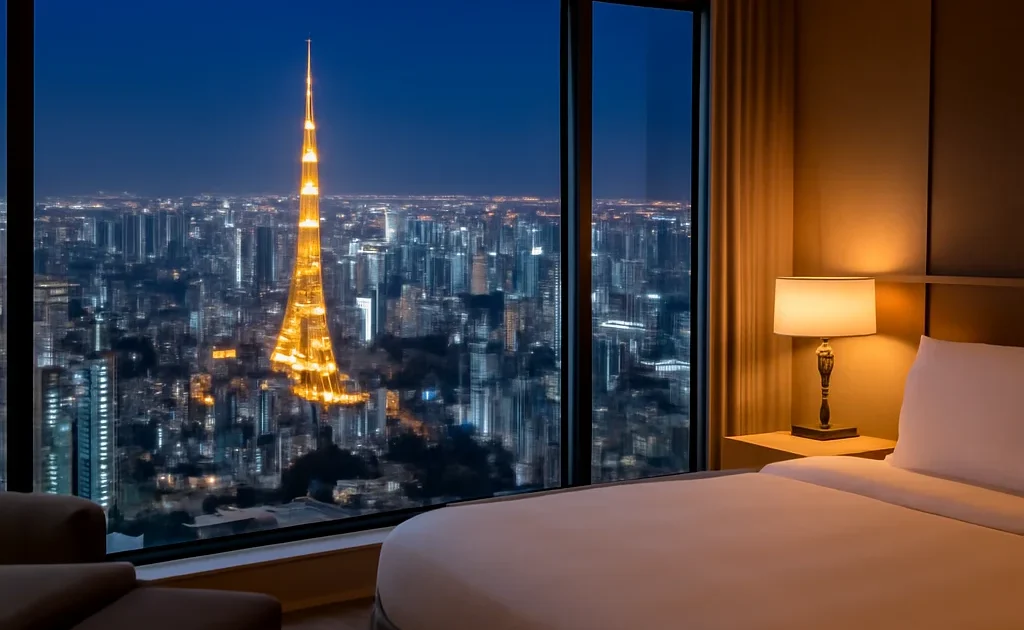
Best Neighborhoods to Stay In
Shinjuku — Best Overall for First-Timers
What it’s like: Tokyo’s entertainment and transport hub. Multiple train lines (easiest connections to everywhere), department stores, dozens of food floors, Kabukicho entertainment district, Golden Gai bars.
Best for: First-time visitors, night owls, anyone prioritizing convenience.
Transport: 5 lines including JR, Tokyo Metro. Direct connections to Narita and Haneda airports.
Downsides: Can feel overwhelming. Kabukicho area is loud at night.
Price range: Budget to luxury — wide selection.
Recommended areas within Shinjuku:
- West Shinjuku (quieter, business hotels, close to Metropolitan Government Building)
- East Shinjuku near Kabukicho (more entertainment, noisier)
—
Asakusa — Best for Culture and Atmosphere
What it’s like: Old Tokyo. Senso-ji Temple, rickshaws, traditional crafts, low-rise buildings, the most atmospheric neighborhood in the city. Near Tokyo Skytree.
Best for: Culture enthusiasts, photographers, travelers who want traditional Japan atmosphere.
Transport: Asakusa Line and Ginza Line (metro), Tobu Line. Good access to central Tokyo.
Downsides: Slightly further from some western neighborhoods (Shibuya, Harajuku). Transport connections not as extensive as Shinjuku.
Price range: Good mid-range and budget options. Less luxury than other areas.
—
Shibuya — Best for Young Travelers and Shopping
What it’s like: The Shibuya Crossing neighborhood. Young, fashion-forward, commercial. Great food in Ebisu and Daikanyama nearby.
Best for: Shopping enthusiasts, those who want Harajuku and Omotesando walking distance.
Transport: Multiple lines including Yamanote Line.
Downsides: Less atmospheric than Asakusa. More expensive than Shinjuku for equivalent hotels.
—
Ginza / Tokyo Station — Best for Business and Luxury
What it’s like: Tokyo’s most upscale shopping district. Excellent Shinkansen access from Tokyo Station.
Best for: Business travelers, luxury hotel seekers, those departing on Shinkansen.
Transport: Multiple metro lines, JR lines from Tokyo Station. Narita Express from Tokyo Station.
Downsides: Less personality than other areas for leisure travelers.
Price range: Mid-range to ultra-luxury.
—
Ueno — Best Budget Option Near Sights
What it’s like: Museum district (Tokyo National Museum, Ueno Zoo), Ameya-Yokocho market, near Asakusa.
Best for: Budget travelers, museum enthusiasts, families.
Transport: Yamanote Line, multiple metro lines. Narita Express.
Price range: Good budget and mid-range options.
—
Akihabara — Best for Electronics and Anime Fans
What it’s like: Electronics, anime, gaming culture. Surrounded by good restaurants and convenient transport.
Best for: Tech enthusiasts, anime fans, budget mid-range.
Transport: JR Yamanote Line, Hibiya Line. Central location.
—
Roppongi — Best for Nightlife and Art
What it’s like: International nightlife, art museums (Mori Art Museum, 21_21 Design Sight), expensive restaurants.
Best for: Art lovers, nightlife seekers, expats.
Downsides: Expensive, can feel touristy at night.
—
What Type of Accommodation to Book
Capsule Hotels
Best for solo travelers who want the uniquely Japanese experience and don’t need much space.
Top options:
- Nine Hours Narita Airport (¥3,000–4,000)
- Book and Bed Tokyo — sleep inside a bookshelf (Shinjuku, Ikebukuro)
- First Cabin — slightly larger pod, more privacy (¥4,000–5,500)
Budget Business Hotels
Clean, small rooms with private bathroom.
Reliable chains:
- Toyoko Inn (from ¥7,000, breakfast sometimes included)
- APA Hotel (from ¥7,500, good locations)
- Dormy Inn (from ¥9,000, often includes communal onsen/sauna)
Mid-Range Hotels
- Shibuya Excel Hotel Tokyu
- Gracery Shinjuku (Godzilla head on the roof)
- Richmond Hotel Premier Asakusa
- Mercure Tokyo Ginza
Ryokan in Tokyo
Traditional Japanese inn experience. Less common in Tokyo than Kyoto but available.
- Ryokan Sawanoya (Ueno area, ¥12,000–16,000/night)
- Andon Ryokan (Asakusa area)
Luxury Hotels
- Park Hyatt Tokyo (Shinjuku, Lost in Translation hotel)
- Aman Tokyo
- The Peninsula Tokyo
- Mandarin Oriental Tokyo
—
Booking Tips
Book well in advance for cherry blossom season (March–April) and autumn foliage (October–November). Popular business hotels in good locations sell out 3–6 months ahead.
Check cancellation policy: Free cancellation rates are usually slightly more expensive but give flexibility for flight changes.
Location over price: A slightly more expensive hotel in the right neighborhood beats a cheaper hotel requiring a 30-minute commute to everything.
—
Klook offers Tokyo hotel packages combined with attraction tickets — often better value than booking separately. Cherry blossom season rooms book out months in advance.
Find Tokyo hotels & experiences on Klook →
* Affiliate link — we may earn a small commission at no extra cost to you.
Related Guides
Plan Your Trip
- 🎫 Tours & activities — KKday
- 🏨 Hotels — EconomyBookings
- 🚕 Airport transfer — Welcome Pickups
- 📱 eSIM & SIM card — Airalo
- 🚗 Car & scooter rental — Localrent
- ✈️ Flights — Kiwi.com