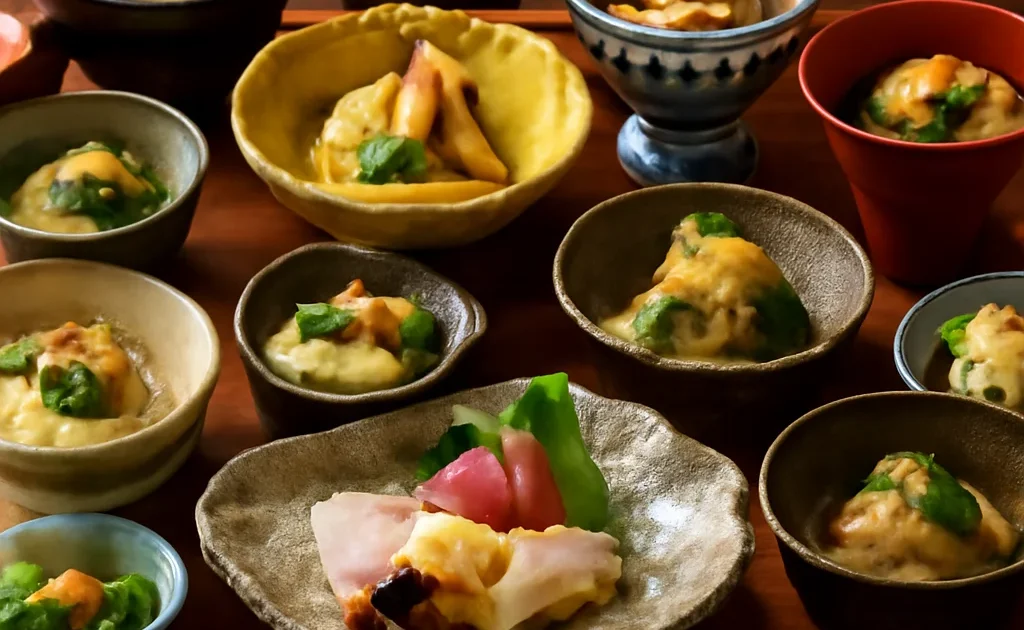
The 25 Best Foods in Japan
1. Ramen
Japan’s most famous noodle dish. Rich pork, chicken or seafood broth with noodles, chashu pork, soft-boiled egg, nori. Every region has its own style. Where: Dedicated ramen shops nationwide. Expect to queue at famous ones.
2. Sushi
Raw fish on vinegared rice. Japan’s most iconic food internationally. The reality in Japan: even cheap conveyor belt sushi (kaitenzushi) is excellent. Where: Tsukiji Outer Market (Tokyo), Nishiki Market (Kyoto), any kaiten-zushi chain.
3. Sashimi
Pure slices of raw fish or seafood without rice. The quality benchmark for Japanese seafood. Where: Any izakaya or seafood restaurant. Markets.
4. Tempura
Lightly battered, fried seafood and vegetables. Done well it’s extraordinarily light and crisp — nothing like Western deep-frying. Where: Tempura restaurants or as a topping on soba/udon.
5. Udon
Thick wheat noodles in clear dashi broth. Tokyo style is darker soy-based; Kyoto/Osaka style is lighter. Extremely filling, cheap and comforting. Where: Marugame Seimen chain (¥400–600), local udon shops.
6. Soba
Thin buckwheat noodles served hot in broth or cold with dipping sauce (zaru soba). More delicate than udon. Where: Dedicated soba restaurants, especially in Tokyo and rural areas.
7. Tonkatsu
Deep-fried breaded pork cutlet served with shredded cabbage and tonkatsu sauce. Satisfying, affordable, universally available. Where: Tonkatsu chain restaurants (Saboten, Wako), casual restaurants.
8. Yakitori
Grilled chicken skewers — every part of the chicken, seasoned with salt or tare sauce. Eaten at izakayas with beer. Where: Any izakaya. Street stalls at festivals.
9. Gyoza
Pan-fried dumplings filled with pork and cabbage. Crispy bottom, chewy top, juicy inside. Eaten as a side dish with ramen or on their own. Where: Ramen shops, Chinese-Japanese restaurants, Gyoza no Ohsho chain.
10. Takoyaki
Osaka’s most famous street food — octopus balls. Batter-cooked spheres filled with octopus, topped with mayo, bonito flakes and sauce. Where: Osaka’s Dotonbori. Street stalls everywhere. Convenience stores (not as good).
11. Okonomiyaki
Savory pancake with cabbage, meat or seafood, topped with mayo and okonomiyaki sauce. Osaka style vs Hiroshima style (layered) are quite different. Where: Osaka, Hiroshima, specialized restaurants.
12. Wagyu Beef
Japanese beef with extraordinary marbling. Not cheap (¥3,000+ for a quality serving) but genuinely different from any other beef. Kobe beef is the most famous variety. Where: Specialized wagyu restaurants. Supermarkets for affordable cuts.
13. Kaiseki
Japan’s haute cuisine — multi-course traditional meal emphasizing seasonality and presentation. Expensive (¥15,000–50,000+) but the pinnacle of Japanese culinary art. Where: High-end ryokans, Kyoto kaiseki restaurants.
14. Karaage
Japanese fried chicken — marinated in soy sauce and ginger, then fried. Crispier and more flavored than Western fried chicken. Where: Izakayas, convenience stores, fast food (Lotteria, MOS Burger).
15. Onigiri
Triangular rice balls wrapped in nori, filled with salmon, tuna mayo, pickled plum or other fillings. The perfect portable meal. Where: Every convenience store (7-Eleven onigiri are particularly good), ¥130–200.
16. Matcha Sweets
Green tea used in everything — ice cream (soft serve), cake, Kit Kats, mochi. Kyoto is the center of matcha culture. Where: Nishiki Market (Kyoto), Nakamise Shopping Street (Tokyo), any tourist area.
17. Mochi
Sticky rice cake — chewy, soft, comes filled with red bean paste, ice cream, or other fillings. Daifuku mochi is the most common type. Where: Japanese sweets shops (wagashi-ya), convenience stores, markets.
18. Kushikatsu
Osaka specialty — deep-fried skewers of meat and vegetables with a shared dipping sauce. One strict rule: never double-dip. Where: Osaka’s Shinsekai neighborhood. Kushikatsu restaurants.
19. Yakisoba
Stir-fried wheat noodles with meat, cabbage and sauce. Festival food, often eaten at matsuri (festivals). Where: Street food stalls, izakayas, convenience stores.
20. Edamame
Steamed and salted soybeans. The free snack at izakayas. Simple, addictive, extremely Japanese. Where: Everywhere.
21. Tsukemono
Japanese pickles — pickled vegetables eaten as side dishes with rice. Every region has its own specialty. Where: Markets, izakayas, alongside any meal.
22. Natto
Fermented soybeans — sticky, pungent, an acquired taste that many foreigners either love or hate. Eaten at breakfast with rice, egg and soy sauce. Where: Convenience stores, traditional breakfast sets.
23. Japan’s Convenience Store Food
Not a specific dish but a phenomenon. 7-Eleven, FamilyMart and Lawson sell excellent fresh food: sandwiches, salads, hot items, onigiri, bento boxes. All under ¥500, all genuinely good. The best convenience store food in the world.
24. Street Food at Festivals
Matsuri (festivals) are an essential food experience — takoyaki, yakitori, kakigori (shaved ice), corn, chocolate-covered bananas, taiyaki (fish-shaped cakes). When: Summer festivals July–August.
25. Kaisendon
Rice bowl topped with fresh seafood. Simpler and cheaper than sushi, often even better. Where: Tsukiji Outer Market, Hakodate Morning Market (Hokkaido), any port city.
—
Japan Food Tips
Eat at lunch. Many restaurants that are expensive at dinner offer affordable lunch sets (teishoku). A ¥1,200 lunch at a restaurant that charges ¥4,000+ at dinner is a great value hack.
Convenience store food is genuinely good. Don’t be a snob about it — 7-Eleven Japan is miles ahead of its international counterparts.
Standing restaurants (tachinomi) are excellent and very cheap.
No tipping ever. Not at restaurants, not for service, never. Offering a tip can cause genuine embarrassment.
Plastic food displays in restaurant windows are helpful — point if you can’t read the menu.
Most restaurants have picture menus or English menus in tourist areas.
—
Japan Food Budget
Street food / convenience store meal: ¥300–800
Ramen / udon / soba: ¥700–1,200
Casual restaurant: ¥1,000–2,000
Mid-range dinner: ¥2,000–5,000
High-end omakase or kaiseki: ¥10,000–50,000+
—
Related Guides
- Best ramen in Tokyo
- Japan travel guide
- Japan on a budget
- Tokyo travel guide
- Kyoto travel guide
Food tours in Tokyo, Kyoto and Osaka give you access to spots locals love — and someone to explain what you’re eating.
Book Japan food tours on Klook →
* Affiliate link — we may earn a small commission at no extra cost to you.
Plan Your Trip
- 🎫 Tours & activities — KKday
- 🏨 Hotels — EconomyBookings
- 🚕 Airport transfer — Welcome Pickups
- 📱 eSIM & SIM card — Airalo
- 🚗 Car & scooter rental — Localrent
- ✈️ Flights — Kiwi.com