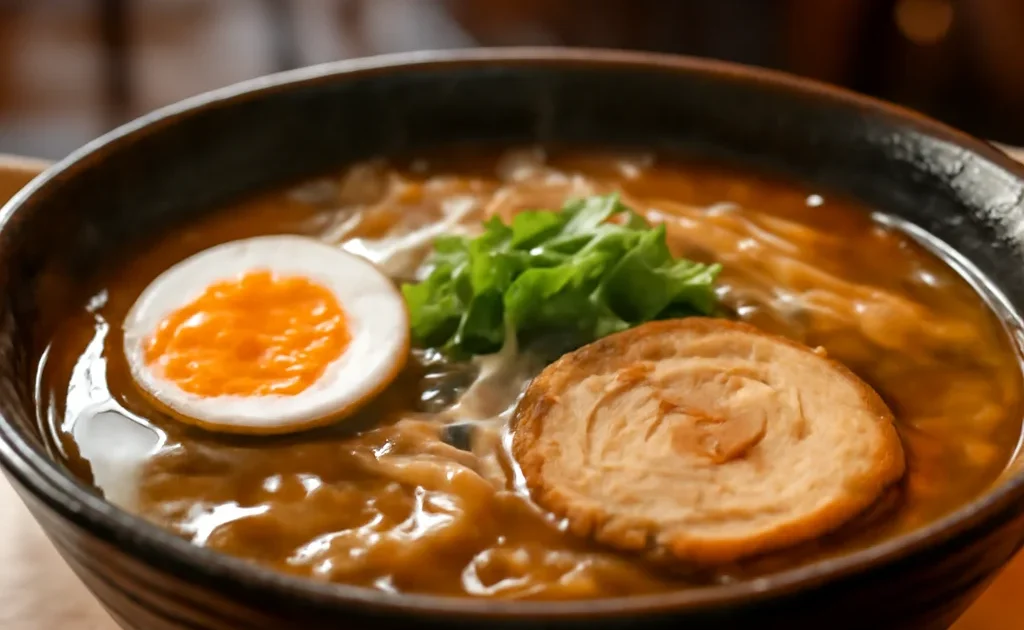
Tokyo Ramen Styles: What to Order
Shoyu (Soy Sauce)
The classic Tokyo style. Clear, brown broth made with chicken or pork stock seasoned with soy sauce. Lighter than other styles. Wavy noodles. This is the style Tokyo made famous.
Best for: First-time ramen eaters. Pure, clean flavors.
Tonkotsu
Rich, cloudy, milky-white broth made from pork bones simmered for 12+ hours. Originated in Kyushu but widely available in Tokyo. Intensely savory and filling.
Best for: Those who want a big, satisfying bowl.
Miso
Ramen seasoned with fermented miso paste. Heartier and earthier than shoyu. Originated in Hokkaido. Often topped with corn and butter in Hokkaido-style shops.
Best for: Cold days, those who enjoy bold fermented flavors.
Tsukemen (Dipping Ramen)
Thick noodles served cold or warm on the side, dipped into a concentrated hot broth. Tokyo is particularly famous for this style. Different experience from regular ramen — more interactive.
Best for: Noodle enthusiasts who want to appreciate the noodles separately from the broth.
Shio (Salt)
Clear, delicate broth seasoned with salt. The most subtle ramen style. Light and clean — showcases the quality of the stock.
Best for: Those who prefer lighter flavors.
—
Best Ramen Neighborhoods in Tokyo
Shinjuku
Shinjuku has several excellent ramen alleys (ramen yokocho) and standalone shops. Easy to find late-night options.
Don’t miss: Fuunji (tsukemen, lines form before opening), Ichiran (solo booths, tonkotsu, open 24 hours)
Shibuya
More tourist-friendly, but quality is high. Several global ramen chains have their best locations here.
Ebisu / Meguro
Higher-end ramen shops catering to locals. Less crowded than Shinjuku/Shibuya, worth seeking out.
Ikebukuro
Tokyo’s second-biggest ramen concentration after Shinjuku. Particularly strong for tsukemen. Ikebukuro Ramen Street at Sunshine City is a good starting point.
Akihabara / Jimbocho
Convenient for visitors, several respected mid-range shops.
Nakameguro / Daikanyama
Boutique ramen shops in upscale neighborhoods. Higher prices, very high quality, quieter atmosphere.
—
Top Ramen Shops Worth Queuing For
Fuunji (Shinjuku): Famous for tsukemen. Opens at 11am — arrive 20 minutes early. Queue moves quickly. ¥1,100.
Ichiran (multiple locations): 24-hour tonkotsu chain. Solo booth dining concept is uniquely Japanese. Great introduction for solo travelers. ¥980–1,200.
Afuri (Ebisu and other locations): Light yuzu shio ramen. Famous for delicate citrus-forward flavor. ¥1,200–1,500.
Nagi (Shinjuku Golden Gai): Tiny 8-seat shop. Niboshi (sardine broth) ramen — intensely flavored, not for everyone. Worth trying. ¥950.
Taishoken (Higashi-Ikebukuro): The shop that invented tsukemen in 1961. Historic. Queue expected on weekends. ¥1,100.
Fuji (Nakameguro): Refined, restaurant-style ramen. Shoyu-based. Worth the higher price (¥1,500–1,800).
—
How to Order Ramen in Japan
Most ramen shops use a ticket vending machine (jidou hanbaiki) at the entrance.
Steps:
- Look at the menu (often photos above the machine)
- Insert cash (carry ¥1,000–2,000 coins and notes)
- Press your chosen ramen button
- Take the ticket
- Hand it to the staff when you sit
- They may ask: firm/soft noodles, rich/light broth, amount of garlic, extra toppings — answer or point
Useful words:
- Katamen (hard noodles) / yawarame (soft noodles)
- Kome (rich broth) / usume (light broth)
- Kaedama — extra serving of noodles added to your remaining broth (free or cheap at some shops)
—
Ramen Etiquette
Slurping is normal and expected. It’s not rude — it’s how you eat ramen.
Eat quickly. Ramen is best in the first 10 minutes. Noodles absorb broth and get soggy.
Don’t share bowls — each person orders their own.
Tipping is not done in Japan. Never tip.
Solo dining is completely normal at ramen shops. Many are designed for it.
—
Ramen Budget
Basic ramen: ¥800–1,000
Standard ramen with toppings: ¥1,000–1,400
Premium / destination ramen: ¥1,500–2,000
Extra noodles (kaedama): ¥100–200
—
Related Guides
- Japan food guide
- Best food in Japan
- Tokyo travel guide
- Japan budget travel
- Japan itinerary 2 weeks
Skip the queues at top ramen shops with a guided food tour — locals know the best spots and the best times to go.
Book Tokyo food tours & ramen experiences on Klook →
* Affiliate link — we may earn a small commission at no extra cost to you.
Plan Your Trip
- 🎫 Tours & activities — KKday
- 🏨 Hotels — EconomyBookings
- 🚕 Airport transfer — Welcome Pickups
- 📱 eSIM & SIM card — Airalo
- 🚗 Car & scooter rental — Localrent
- ✈️ Flights — Kiwi.com