What’s Included in a Ryokan Stay
The room:
- Tatami mat flooring
- Low table with cushions for sitting
- No Western-style furniture (some modern ryokans have hybrid rooms)
- Futon bedding laid out by staff each evening
- Yukata (light cotton robe) — worn for dinner, around the property, and sometimes to the onsen
- Tabi socks often provided
- Slippers for corridors (different slippers for toilet — important!)
Meals:
Most ryokans include dinner and breakfast (MAPs — Modified American Plan). This is usually the best part.
- Dinner (kaiseki): Multi-course seasonal meal. 7–12 courses. 90+ minutes. One of the finest dining experiences in Japan.
- Breakfast: Traditional Japanese breakfast — grilled fish, rice, miso soup, pickles, egg. Often extraordinary.
Onsen:
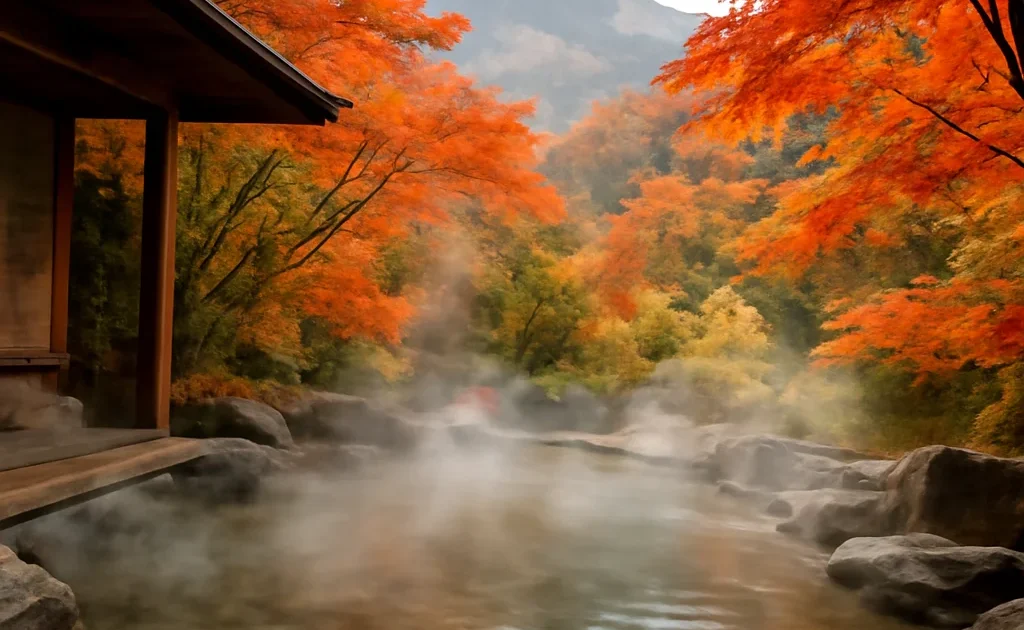
Communal hot spring bath. Separate areas for men and women. Usually accessible from early morning until late night.
What’s typically NOT included:
- Drinks with dinner (ordered separately at considerable cost)
- Alcoholic beverages
- In-room WiFi (varies — most modern ryokans have it)
—
Ryokan Etiquette: Everything You Need to Know
Arrival
- Remove shoes at the entrance (genkan) and step up into the building
- Slippers are provided — wear them everywhere except tatami rooms (remove slippers before entering tatami)
Yukata
- Yukata is worn right side over left (left over right is for funerals — important distinction)
- Tie the obi (sash) around the waist
- Wear it to dinner, around the property, and to the onsen if permitted
- Don’t wear it off the property
Dinner Service
- Dinner is usually at a specific time — 6pm or 7pm is typical
- You’re served in your room or a private dining room
- Staff kneel to serve — it’s considered respectful to slightly bow in acknowledgment
- Don’t rush — kaiseki is meant to be experienced over 90 minutes+
- Order drinks separately if desired
The Onsen
- Wash thoroughly before entering the bath — shower first, wash all soap off, then enter the communal bath
- No swimwear — onsen are entered completely unclothed
- Hair up or covered — don’t let hair touch the water
- Don’t put your towel in the water — carry it folded on your head
- Tattoos: Many traditional onsen ban visible tattoos. Check before booking if relevant.
- Typical hours: 3pm–midnight and early morning (6–10am)
—
Ryokan Price Guide
| Level | Price per Person | What You Get |
|---|---|---|
| Budget ryokan (no meals) | ¥8,000–15,000 | Room, onsen, basic facilities |
| Mid-range (dinner + breakfast) | ¥20,000–35,000 | Full kaiseki, good onsen |
| Quality ryokan | ¥35,000–60,000 | Exceptional kaiseki, private onsen possible |
| Premium ryokan | ¥60,000–150,000+ | Private onsen in room, extraordinary kaiseki |
Note: Prices are per person, not per room. For two people sharing, double the figure.
—
Best Regions for Ryokan Stays
Kyoto: The most prestigious ryokan destination. Gion area is particularly special.
Hakone: Mountain ryokans with Mount Fuji views and natural onsen.
Nikko: Mountain setting, historical atmosphere.
Kinosaki Onsen (Hyogo Prefecture): Entire onsen town — stay at a ryokan and walk between seven public bath houses in your yukata.
Kusatsu Onsen (Gunma): Japan’s top-ranked onsen town. Yumomu ceremony is unique.
Beppu (Kyushu): Multiple “hells” (jigoku) — dramatic volcanic springs. Good ryokan options.
—
Onsen day use passes and ryokan package experiences in Kyoto and Hakone are available through Klook — a good way to experience the onsen culture without committing to a full overnight stay.
Book ryokan experiences & onsen tours on Klook →
* Affiliate link — we may earn a small commission at no extra cost to you.
Related Guides
- Where to stay in Kyoto
- Where to stay in Tokyo
- Hakone day trip guide
- Japan travel costs
- Japan travel tips
Plan Your Trip
- 🎫 Tours & activities — KKday
- 🏨 Hotels — EconomyBookings
- 🚕 Airport transfer — Welcome Pickups
- 📱 eSIM & SIM card — Airalo
- 🚗 Car & scooter rental — Localrent
- ✈️ Flights — Kiwi.com