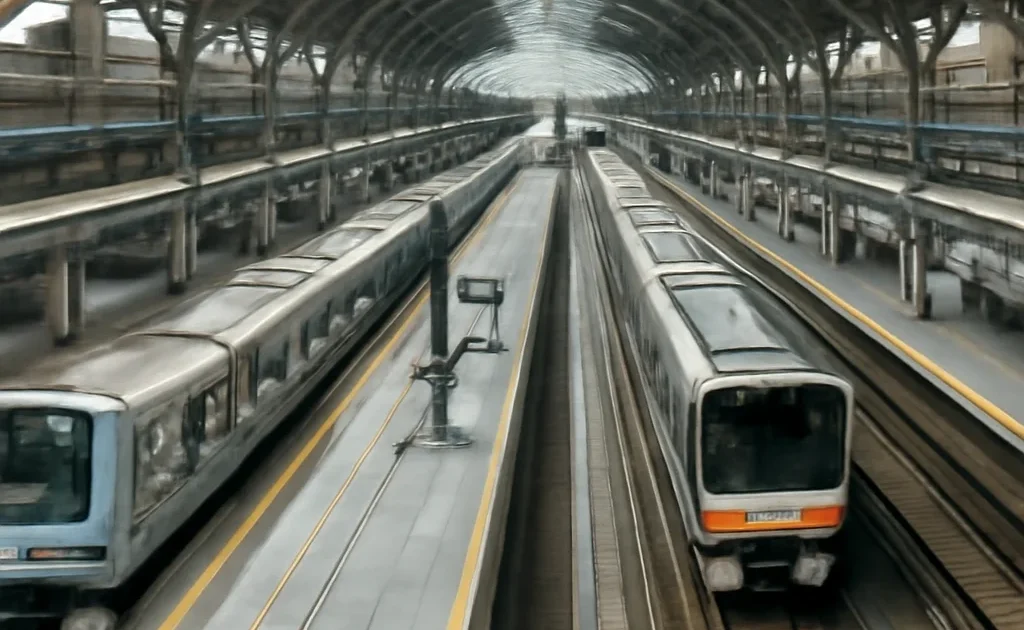
The Big Picture: Japan’s Train Hierarchy
Japan has two types of train operators:
JR (Japan Railways): The national rail network. Shinkansen (bullet trains), limited express trains, and local trains. Covered by JR Pass.
Private railways: Dozens of private companies (Tobu, Odakyu, Kintetsu, Hankyu, Tokyo Metro, etc.). Not covered by JR Pass — use IC card.
—
IC Cards (Suica, Pasmo, etc.)
The most important thing to get in Japan. Buy a Suica card at the airport on arrival.
An IC card lets you tap in and out of virtually every train and bus in Japan without buying individual tickets. Load money onto it, tap on entry, tap on exit — the fare is automatically deducted.
Where it works: All JR trains, Tokyo Metro, most private railways, most buses, convenience stores, vending machines, coin lockers.
Cost: ¥500 deposit + initial load. Reload at any ticket machine or convenience store.
—
Shinkansen (Bullet Trains)
Japan’s most famous transport. The Shinkansen network covers most of the country with trains running at 200–320km/h.
Main lines:
- Tokaido Shinkansen: Tokyo–Nagoya–Kyoto–Osaka–Hiroshima (most used by tourists)
- Tohoku Shinkansen: Tokyo–Sendai–Aomori
- Hokkaido Shinkansen: Tokyo–Hakodate–Sapporo (new extension 2031)
- Joetsu Shinkansen: Tokyo–Niigata
- Hokuriku Shinkansen: Tokyo–Karuizawa–Kanazawa–Tsuruga
Types:
- Nozomi/Mizuho: Fastest, stops at fewest stations. NOT covered by JR Pass.
- Hikari/Sakura: Slightly slower, more stops. Covered by JR Pass.
- Kodama/Tsubame: All stops. Covered by JR Pass.
Booking: Reserved seats recommended for peak seasons. Book at any JR Ticket Office (free with JR Pass, pay face value without).
—
Limited Express Trains
Faster than regular express trains, stop at fewer stations. Connect cities not served by Shinkansen. Most are covered by JR Pass.
Examples: Narita Express (Tokyo–Narita Airport), Haruka (Kyoto–Kansai Airport), Super Hakuto (Osaka–Tottori).
—
Local and Urban Trains
The backbone of daily travel. Tokyo’s metro network alone has 13 lines and 285 stations. Use Suica card — don’t try to buy individual tickets.
Google Maps: Works perfectly for all Japan train navigation. Shows cheapest and fastest routes, real-time platform information, and fare estimates.
—
Buses
Highway buses (kōsoku basu): Long-distance overnight buses between major cities. Significantly cheaper than Shinkansen (Tokyo–Osaka bus: ¥3,000–4,000 vs ¥13,000 by Shinkansen). Takes 7–9 hours overnight. JR buses often covered by JR Pass.
Local buses: Used in Kyoto (no subway to many temples) and rural areas. IC card works on most. Day pass (¥700 in Kyoto) worth it if using frequently.
Airport buses: Often cheaper than trains. Narita–Tokyo by bus: ¥1,000–3,000 (vs ¥3,000–4,000 by Narita Express).
—
Taxis
Available everywhere. Flag down on the street or use apps (S.Ride, GO, Didi).
Expensive by Western standards but not extreme:
- Minimum fare: ¥500–730 (varies by region)
- Tokyo city journey (3km): ¥1,000–1,500
- Airport runs: ¥8,000–20,000
Tips:
- No need to tip
- Doors open and close automatically
- Most accept IC cards and credit cards now
- Drivers speak little English — show destination on Google Maps
—
Rental Cars
Japan drives on the left side of the road. International driving permits are accepted.
Useful for: Rural areas (Hokkaido, Tohoku, Kyushu countryside), visiting areas with poor public transport.
Not useful for: Tokyo, Osaka, Kyoto — parking is expensive and public transport is better.
Cost: ¥5,000–10,000/day for basic car. Expressway tolls add ¥2,000–5,000 per long journey.
International navigation (Google Maps, car GPS) works well. Road signs include English in most areas.
—
Bicycles
Japan is cycling-friendly. Bicycle rental is easy in tourist areas (Kyoto, Hiroshima, rural areas). ¥500–1,500/day.
Some areas have electric bicycle rental for hilly terrain.
Rules: Cycling on pavements is common but technically regulated. Helmets not required by law for adults but recommended.
—
Practical Transport Tips
Google Maps: Download offline map of your region. Use for all navigation — it integrates all train, bus and walking options.
IC card on phone: iPhone and Android support digital Suica through Apple Pay and Google Pay — no physical card needed, reload with credit card.
Rush hours: 7:30–9am and 5:30–8pm in cities. Trains are very crowded. Avoid if possible.
Priority seats: Light blue seats on trains are for elderly, pregnant and disabled passengers. Vacate if needed.
Eating on trains: On local and urban trains, eating is frowned upon. On Shinkansen, it’s perfectly acceptable.
—
Pre-booked airport transfers eliminate stress on arrival — fixed price, driver meets you at arrivals. Available for Narita, Haneda and Kansai airports.
Book Japan airport transfers on KiwiTaxi →
* Affiliate link — we may earn a small commission at no extra cost to you.
Related Guides
Plan Your Trip
- 🎫 Tours & activities — Klook
- 🏨 Hotels — EconomyBookings
- 🚕 Airport transfer — Welcome Pickups
- 📱 eSIM & SIM card — Airalo
- 🚗 Car & scooter rental — Localrent
- ✈️ Flights — Kiwi.com