Introduction
Kyushu is Japan’s southernmost main island — warmer, more relaxed, less crowded than Honshu, and home to some of Japan’s most distinctive food, remarkable history, and extraordinary hot springs. Fukuoka is rapidly becoming one of Asia’s most livable cities.
—
Destinations
Fukuoka
Japan’s sixth-largest city and rapidly growing in international recognition. Famous for:
Hakata ramen: Fukuoka invented tonkotsu (pork bone) ramen. The rich, cloudy broth here is the original. Ichiran started here. Try at Shin-Shin or Hakata Daruma.
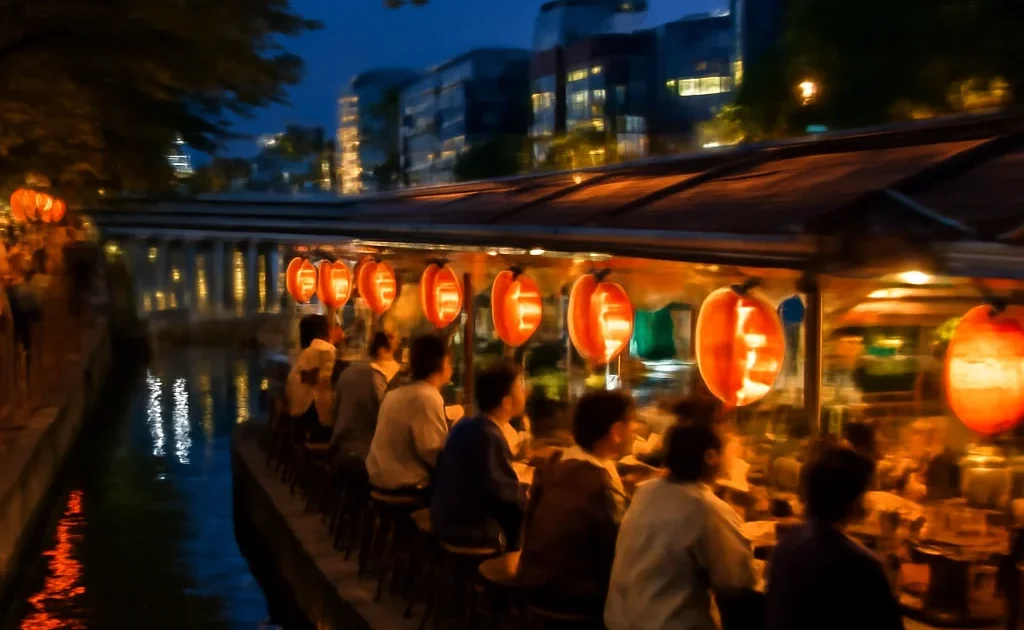
Yatai food stalls: Open-air street food stalls along the Nakasu canal at night. 150+ stalls serving ramen, oden, yakitori, gyoza. One of Japan’s most atmospheric evening food experiences.
Ohori Park: Beautiful central park with walking path around a large pond.
Easy access to Asia: Fukuoka is closer to Seoul and Shanghai than to Tokyo — popular as a first Japan stop from Korea and China.
Nagasaki
The second atomic bomb target (August 9, 1945). Like Hiroshima, the city has become a peace advocate.
Nagasaki Peace Park and Atomic Bomb Museum: Essential historical sites.
Glover Garden: Former residences of foreign merchants who helped open Japan to the West in the 19th century. Panoramic harbor views.
Dejima: The artificial island where the Dutch East India Company maintained Japan’s only contact with the outside world during 200+ years of isolation. Reconstructed.
Champon: Nagasaki’s signature noodle dish — brought by Chinese immigrants, unique to the city. Try at Shikairō restaurant.
Beppu
Japan’s most prolific hot spring town. Over 2,700 individual springs, 7 “Hells” (jigoku) — spectacularly dramatic thermal pools in vivid colors.
The Hells tour: The Blood Pond Hell (Chinoike Jigoku) is the most famous — crimson red water. The Tornado Hell (Tatsumaki Jigoku) erupts regularly. Combined ticket: ¥2,000.
Kumamoto
Kumamoto Castle: One of Japan’s three great castles. Badly damaged in 2016 earthquake, undergoing major reconstruction — the restoration process itself is now a tourist attraction.
Aso: Active volcanic caldera nearby — one of the world’s largest. Hiking and cycling around the crater rim.
—
Getting to Kyushu
From Tokyo: Shinkansen to Hakata (Fukuoka) — 5 hours with JR Pass (Hikari/Sakura), 4.5 hours with Nozomi (not covered by pass). Long but doable; flying is faster.
By air: Tokyo–Fukuoka flights from ¥5,000–8,000 (45 minutes). Most practical for long-distance access.
Within Kyushu: Shinkansen connects Fukuoka, Kumamoto, and Kagoshima. Local lines reach Nagasaki and Beppu.
—
Fukuoka food tours, Beppu onsen day passes and Nagasaki historical tours are bookable on Klook.
Book Kyushu tours & Fukuoka experiences on Klook →
* Affiliate link — we may earn a small commission at no extra cost to you.
Plan Your Trip
- 🎫 Tours & activities — KKday
- 🏨 Hotels — EconomyBookings
- 🚕 Airport transfer — Welcome Pickups
- 📱 eSIM & SIM card — Airalo
- 🚗 Car & scooter rental — Localrent
- ✈️ Flights — Kiwi.com