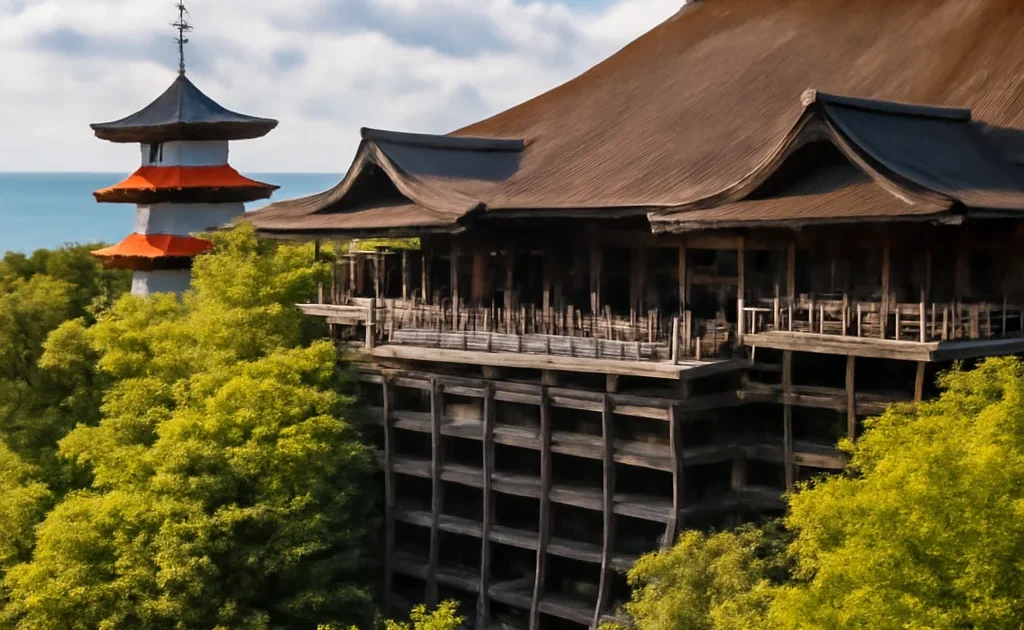
Temple vs Shrine: The Difference
Shrines (jinja): Shinto places of worship. Identified by torii gates (usually orange-red), shimenawa rope decorations, and fox or deer statues. You clap twice to summon the deity. Often in forested, natural settings.
Temples (tera/ji): Buddhist places of worship. Identified by Buddha statues, incense burners, and pagodas. You bow and ring a bell (if present) rather than clapping.
How to Behave at a Shrine
- Bow before passing through the torii gate
- Walk on the sides of the main path, not the center (the center is for the gods)
- Purify hands at the temizuya (water font)
- Approach the main hall, toss a coin (any amount), bow twice, clap twice, bow once
- Pray silently
Best Shrines
Fushimi Inari (Kyoto): 10,000 torii gates up a mountain — iconic
Meiji Jingu (Tokyo): Forested shrine in the middle of urban Tokyo
Ise Jingu (Mie): Japan’s most sacred shrine — rebuilt every 20 years, simple and powerful
Izumo Taisha (Shimane): Japan’s oldest and most important marriage shrine
Best Temples
Todai-ji (Nara): World’s largest wooden building, giant Buddha
Senso-ji (Tokyo): Tokyo’s oldest and most visited temple
Kinkaku-ji (Kyoto): The gold-leaf pavilion reflected in the pond
Plan Your Trip
- 🎫 Tours & activities — Klook
- 🏨 Hotels — EconomyBookings
- 🚕 Airport transfer — Welcome Pickups
- 📱 eSIM & SIM card — Airalo
- 🚗 Car & scooter rental — Localrent
- ✈️ Flights — Kiwi.com