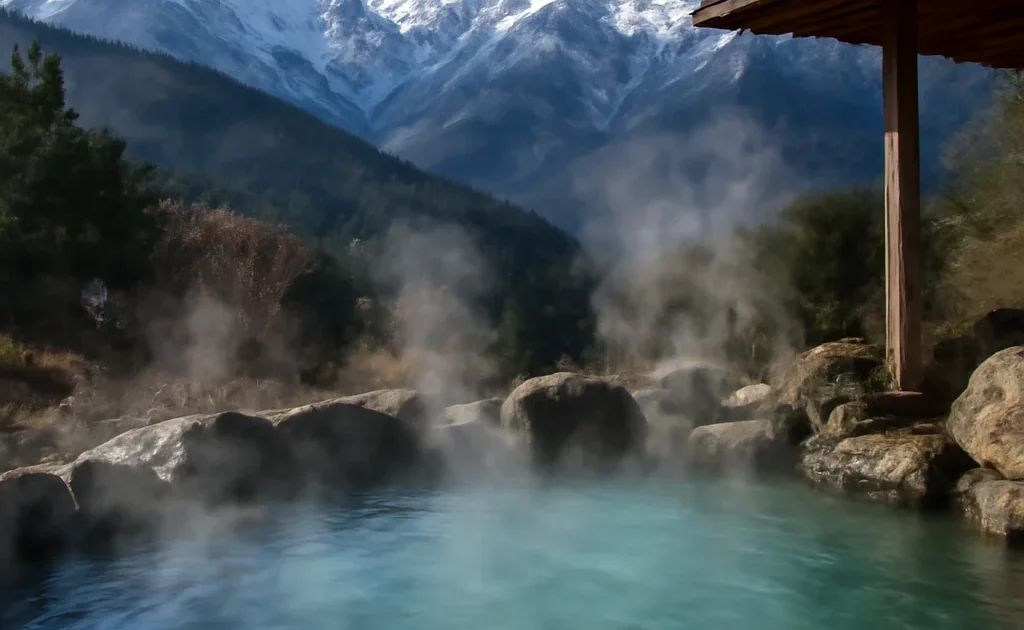
What Is an Onsen?
An onsen (温泉) is a natural hot spring bath — a deeply embedded Japanese cultural institution. Japan has over 27,000 onsen, heated by the country’s volcanic geology. Bathing in mineral-rich hot water is considered therapeutic, relaxing, and social.
—
Types of Onsen
Rotenburo (outdoor bath): The most scenic. Mountain views, forest baths, ocean-side pools. The quintessential image of Japan’s onsen culture.
Uchiyu (indoor bath): Enclosed. Often more consistently warm.
Kashikiri (private/reserved bath): Booked by time slot for private use. The solution for tattoos or those uncomfortable with communal nudity.
Ashiyu (foot bath): Public foot-soaking pools. Found at many train stations and tourist areas. Free or minimal cost. The entry point for onsen culture.
—
Essential Onsen Etiquette
1. Wash before entering the bath.
This is the most important rule. Shower thoroughly at the washing stations (provided with soap, shampoo, conditioner) and rinse completely before entering the communal bath.
2. Enter without clothing.
Onsen are entered completely unclothed. Swimwear is prohibited in most traditional onsen (except designated “swimsuit OK” pools).
3. Don’t put your towel in the water.
The small modesty towel is kept out of the water — fold it on your head or leave it at the edge.
4. No loud behavior.
Onsen are quiet, meditative spaces. Keep voices low.
5. Don’t drain the bath.
The mineral composition is maintained — don’t drain water unnecessarily.
6. Shower after if you have sensitive skin.
The mineral content can be strong. Rinse off if needed.
—
The Tattoo Question
Many traditional onsen ban visible tattoos — a policy from historical association of tattoos with yakuza (organized crime). This is changing but still common.
Options if you have tattoos:
- Private kashikiri baths: Book a private time slot. No restrictions.
- Tattoo-friendly onsen: Increasingly available — search specifically.
- In-room onsen at ryokans: Many ryokans with private baths have no restrictions.
—
Best Onsen Destinations
Hakone
Easy from Tokyo (1.5 hours). Multiple onsen facilities throughout the resort area. The Hakone Yuryo and Tenzan Tohji-kyo offer excellent day-use bathing.
Kusatsu (Gunma Prefecture)
Japan’s most celebrated onsen town. The Yubatake (hot water field) produces 32,000 liters per minute. Yumomu ceremony unique to this town.
Kinosaki (Hyogo Prefecture)
The ideal onsen town experience — seven public bath houses throughout a small town. Stay at a ryokan, walk between baths in your yukata.
Beppu (Kyushu)
Japan’s largest onsen by volume. The “Eight Hells” are dramatic sightseeing. Over 2,700 individual springs.
Nikko/Kinugawa (Tochigi)
Mountain onsen close to Tokyo. Beautiful forest setting, high quality ryokans.
—
Onsen Health Benefits
The mineral composition varies by spring type and has different reputed benefits:
Sodium chloride (salt): Warms deeply, skin softening
Sulfur: Skin conditions, respiratory benefits (distinctive smell)
Bicarbonate: Smooth skin (called “beauty bath”)
Iron: Reddish water, said to be beneficial for anemia
—
Hakone onsen day use passes and ryokan stays with private onsen are bookable on Klook. Private baths have no tattoo restrictions.
Book Japan onsen day trips & ryokan experiences on Klook →
* Affiliate link — we may earn a small commission at no extra cost to you.
Plan Your Trip
- 🎫 Tours & activities — KKday
- 🏨 Hotels — EconomyBookings
- 🚕 Airport transfer — Welcome Pickups
- 📱 eSIM & SIM card — Airalo
- 🚗 Car & scooter rental — Localrent
- ✈️ Flights — Kiwi.com