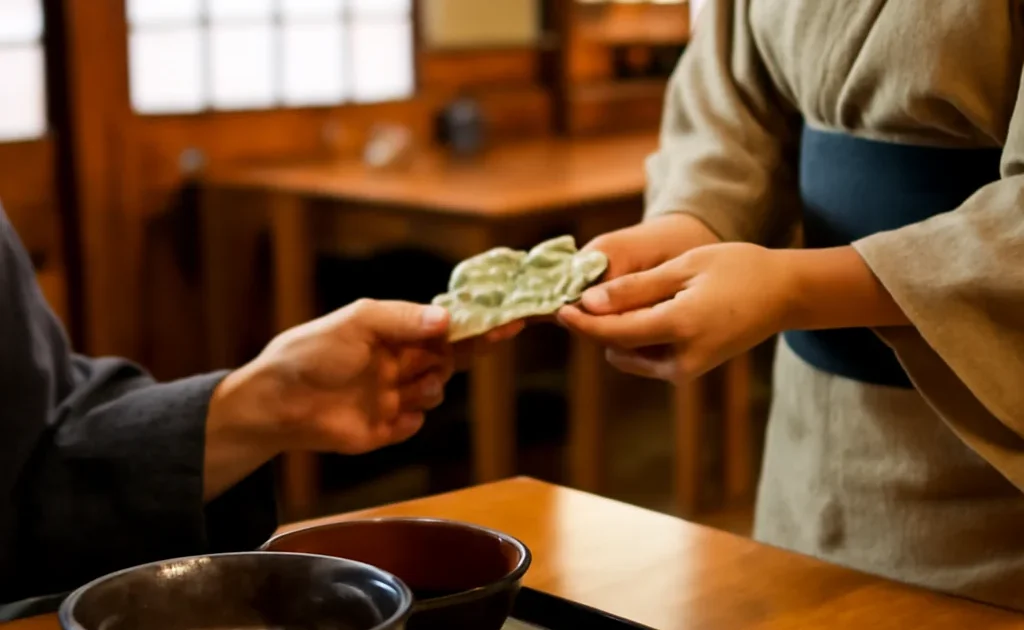
The Answer: No, Never (With One Exception)
Japan is one of the few countries where tipping is not just unnecessary but can cause discomfort or offense. Japanese hospitality (omotenashi) is about providing perfect service as professional pride — not as a transaction expecting a reward.
Why Tipping Can Be Offensive
Tipping can imply the person needs extra money, that their service was unexpectedly good (suggesting it usually isn’t), or that you’re trying to buy preferential treatment. None are positive. Service staff are paid a living wage and take genuine professional pride in their work.
Specific Situations
Restaurants: Never tip. If you leave extra money, staff will chase you to return it.
Taxis: Never tip. Pay the exact fare. Drivers return change precisely.
Hotels: No tip at check-in, check-out, or for bellhop service.
Ryokan (The Exception): A kokorozuke tip to your personal nakai-san attendant in a special envelope (pochibukuro) is sometimes appropriate. ¥1,000–3,000. Never hand directly — always use an envelope. This is Japanese ritual, not Western-style tipping.
Tour guides: No tip expected. A positive review means more.
What to Do Instead
Say “gochisosama deshita” after meals. Bow when thanking hotel staff. Leave an online review. These mean more than money.
Plan Your Trip
- 🎫 Tours & activities — Klook
- 🏨 Hotels — EconomyBookings
- 🚕 Airport transfer — Welcome Pickups
- 📱 eSIM & SIM card — Airalo
- 🚗 Car & scooter rental — Localrent
- ✈️ Flights — Kiwi.com