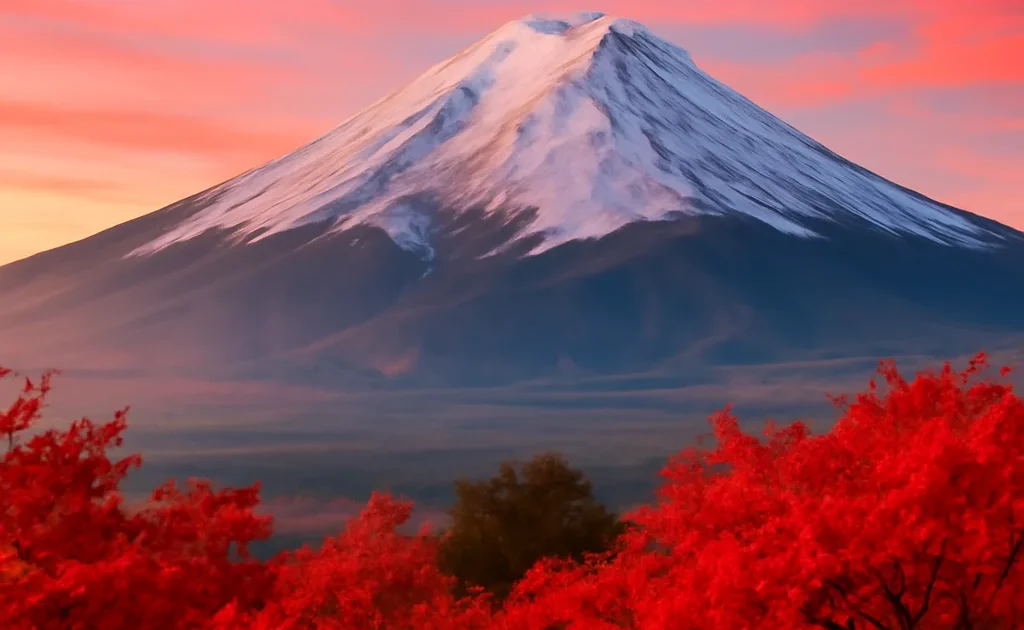
Can You Climb Fuji?
Yes — Mount Fuji is climbed by 300,000+ people every year. It requires no technical climbing skills or equipment. It is, however, a genuine physical challenge: 1,400m of elevation gain from 5th Station to the summit at 3,776m, often in cold, windy conditions, frequently in darkness.
—
Climbing Season
Official season: Approximately July 1 – September 10.
Outside this window, mountain huts and toilets are closed, trails may be snow-covered, and emergency services are unavailable. Climbing outside season is possible but strongly discouraged.
New 2024 restriction: The Yoshida Trail now closes the gate to prevent crowds and dangerous nighttime climbing by unprepared hikers (“bullet climbing”). Check current rules at fujisan.or.jp.
—
The Trails
Yoshida Trail (Most Popular)
Starting point: Fuji Subaru Line 5th Station (2,305m)
Distance: 14km round trip
Time: 5–7 hours up, 3–4 hours down
Facilities: Most mountain huts, toilets, water (expensive)
Character: Busiest trail. Good infrastructure. 5th Station has shops, restaurants.
Fujinomiya Trail
Starting point: Fujinomiya 5th Station (2,400m)
Time: 4–6 hours up, 2.5–3.5 hours down
Character: Steeper but shorter. Second most popular.
Gotemba Trail
Starting point: Gotemba 5th Station (1,440m)
Character: Longest, least crowded. The Osunabashiri (sand run) descent is fast and fun.
—
The Overnight Strategy (Recommended)
Most experienced climbers ascend overnight to reach the summit at sunrise (goraiko). This avoids afternoon cloud cover, provides a spectacular goal, and means you’re above the cloud line for the sunrise.
Typical plan:
- Leave 5th Station 8–10pm
- Hike through the night
- Reach summit 4–5am
- Watch sunrise (typically 4:45–5:15am in summer)
- Descend by 9–10am
Mountain huts: Located at regular intervals from 7th Station upward. Dormitory sleeping (¥7,000–12,000). Food and drinks available (expensive). Book months ahead for July–August.
—
Essential Packing List
Non-negotiable:
- Headlamp + spare batteries (night hiking essential)
- Warm waterproof jacket (summit can be 5°C in August)
- Gloves and hat
- Trekking poles (rentable at 5th Station, essential for knees)
- 2 liters of water minimum (supplement at mountain huts)
- Rain gear
- Layers (temperature drops ~6°C per 1,000m)
Recommended:
- Gaiters (volcanic gravel gets in shoes)
- High-calorie snacks
- Altitude sickness medication (consult doctor)
- Portable oxygen canister (available at 5th Station)
—
Altitude Sickness
Fuji’s altitude (3,776m) causes altitude sickness in a significant percentage of climbers — headache, nausea, dizziness.
Prevention:
- Acclimatize at 5th Station for 30–60 minutes before starting
- Ascend slowly
- Hydrate well
- Don’t push through worsening symptoms — descend
Treatment: The only reliable treatment is descent. Do not continue up if symptoms are severe.
—
Costs
| Item | Cost |
|---|---|
| Highway bus Shinjuku → 5th Station | ¥2,800 each way |
| Mountain hut overnight | ¥7,000–12,000 |
| Trekking pole rental | ¥1,000 |
| Summit fee (Yoshida Trail) | ¥1,000 |
| Water at mountain huts | ¥500/500ml |
| Descent bus | ¥2,800 |
—
Guided Fuji climbing tours include transport from Tokyo, equipment guidance and an experienced guide — ideal for first-time climbers. Book 2–3 months ahead for July–August.
Book Mount Fuji guided climbing tours on Klook →
* Affiliate link — we may earn a small commission at no extra cost to you.
Plan Your Trip
- 🎫 Tours & activities — KKday
- 🏨 Hotels — EconomyBookings
- 🚕 Airport transfer — Welcome Pickups
- 📱 eSIM & SIM card — Airalo
- 🚗 Car & scooter rental — Localrent
- ✈️ Flights — Kiwi.com