The Fundamental Difference
Japan has two major religious traditions — Buddhism and Shinto — and both have distinct architecture, rituals, and meaning. Visitors often confuse them. Understanding the difference enriches every temple and shrine visit.
—
Shinto Shrines (Jinja 神社)
Religion: Shinto — Japan’s indigenous religion. Worships kami (spirits) present in natural elements: mountains, rivers, trees, the sun.
Architecture: Torii gate (the distinctive red or wooden gate marking the sacred boundary), gravel paths, wooden main hall (honden), offerings hall (haiden).
Identifying features:
- Torii gate at entrance
- Shimenawa rope (twisted straw, often hanging)
- Komainu (lion-dog guardian statues)
- White and red color scheme common
Ritual: Approach the purification fountain (temizuya), rinse hands, bow twice, clap twice, pray, bow once.
Famous shrines: Meiji Jingu (Tokyo), Fushimi Inari (Kyoto), Itsukushima (Miyajima), Izumo Taisha (Shimane), Ise Jingu (Mie — Japan’s most sacred).
—
Buddhist Temples (Tera/Ji 寺)
Religion: Buddhism — introduced from China/Korea in 6th century. Many Japanese observe both Buddhism and Shinto throughout life.
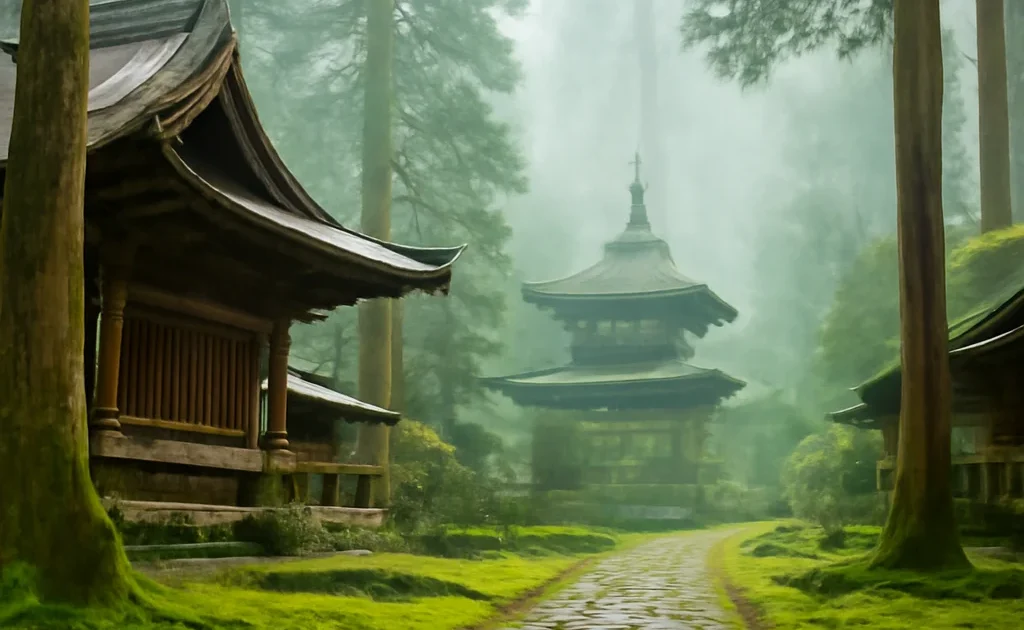
Architecture: Often larger and more ornate complexes. Main hall (hondo or kondo), pagoda, cemetery (most Japanese Buddhist temples maintain cemeteries).
Identifying features:
- Incense burner (usually smoking) at entrance
- Large main gate (sanmon) with guardian figures (niō)
- Cemetery grounds
- No torii gate (unless shrine and temple share the same grounds — this happens)
Ritual: Hands together in prayer, no clapping. Incense offering.
Famous temples: Senso-ji (Asakusa, Tokyo), Kinkaku-ji/Ginkaku-ji (Kyoto), Todai-ji (Nara), Kofuku-ji (Nara), Ryoan-ji (Kyoto), Eiheiji (Fukui).
—
How to Visit Properly
Both: Remove hats upon entering. Photography usually permitted in grounds, restricted in main halls (look for signs). No flash photography.
Dress: No strict dress code at most sites. Some request covered shoulders/knees. Sacred inner sanctuaries may restrict access.
Offerings: Toss a coin into the offering box (any denomination). This is a donation, not a purchase of divine favor.
Fortune slips (omikuji): Available at most shrines and temples. Translated into English at major tourist sites.
Ema: Wooden votive tablets. Write a wish and hang on the designated rack.
—
Guided temple and shrine tours in Kyoto and Nara provide cultural context that transforms the experience. Available on Klook.
Plan Your Trip
- 🎫 Tours & activities — KKday
- 🏨 Hotels — EconomyBookings
- 🚕 Airport transfer — Welcome Pickups
- 📱 eSIM & SIM card — Airalo
- 🚗 Car & scooter rental — Localrent
- ✈️ Flights — Kiwi.com