Introduction
Hiroshima carries one of history’s heaviest stories — the world’s first nuclear weapon was dropped here on August 6, 1945. The city was rebuilt from rubble into a thriving, forward-looking metropolis that has made peace advocacy its identity. Visiting Hiroshima is essential, moving, and ultimately hopeful.
—
Peace Memorial Park and Museum
The epicenter of why most visitors come to Hiroshima.
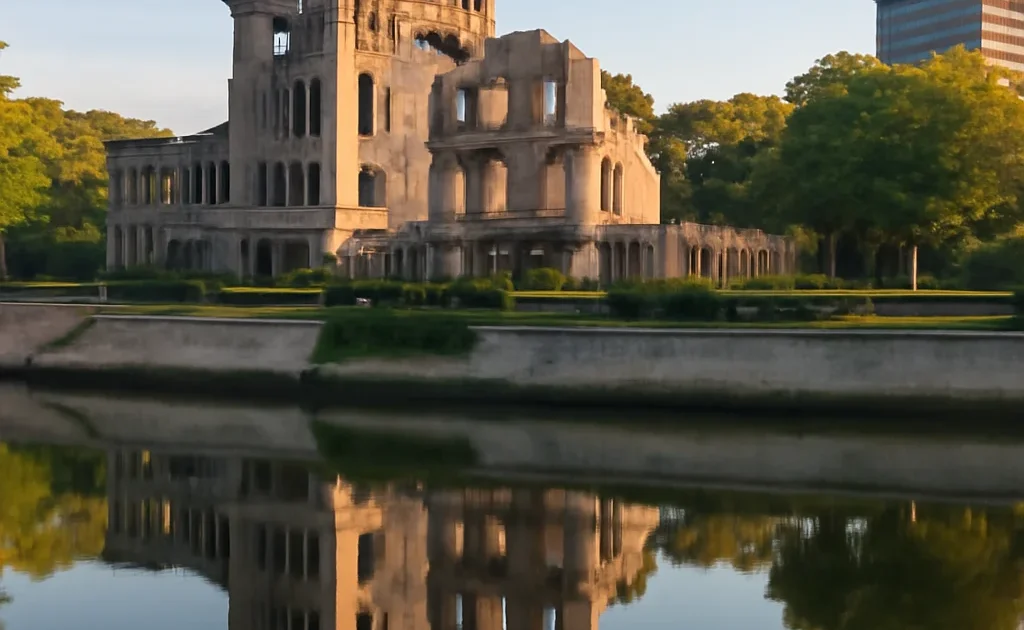
Atomic Bomb Dome (Genbaku Dome)
The ruins of the Hiroshima Prefectural Industrial Promotion Hall — left standing as a UNESCO World Heritage memorial. The building was directly beneath the explosion (580 meters). Walking around it at dusk is profoundly quiet.
Peace Memorial Museum
Japan’s most important museum. Two buildings document the history and human impact of the atomic bomb — personal belongings, testimony, photographs. Allow 2–3 hours. Bring tissues. ¥200.
Practical note: The museum is powerful and not easy to experience. Visit in the morning when you have energy to absorb it rather than as an afterthought.
Peace Memorial Park
The 122,100 square meter park built on the site of the bomb’s hypocenter. The Children’s Peace Monument (inspired by Sadako Sasaki’s story of folding 1,000 paper cranes), the Flame of Peace, and the cenotaph are all within the park.
—
Miyajima Island
The floating torii gate of Itsukushima Shrine — Japan’s most iconic image alongside Mount Fuji — is 20 minutes from Hiroshima by ferry.
Getting There
JR Ferry from Miyajimaguchi station (covered by JR Pass). 10-minute ferry crossing (¥190). The JR Miyajima Ferry is covered by JR Pass.
What to See
Itsukushima Shrine: The entire shrine complex is built on stilts over the water. At high tide, the torii gate appears to float. Check tide times before visiting — low tide allows you to walk to the gate.
Daisho-in Temple: Less visited than Itsukushima, more atmospheric. Stone lanterns, statues with colorful bibs, hidden corners. Walk up from the shrine.
Momijidani Park: Maple valley behind the shrine. Peak autumn color in mid-November.
Mount Misen: The island’s highest point. Ropeway (¥2,000 return) or 90-minute hike. Views of the Seto Inland Sea.
Miyajima Food
Oysters: Hiroshima produces 60% of Japan’s oysters. Try them grilled on a shell from street vendors near the ferry terminal. ¥350–500 each.
Momiji manju: The island’s famous maple-leaf shaped sweet cakes. Available everywhere. Try fresh from the oven.
—
Hiroshima Food
Hiroshima okonomiyaki: Completely different from Osaka style — layered rather than mixed. Noodles added inside the layers. Try at Okonomimura (a multi-floor building of okonomiyaki restaurants, 2-24F).
Oyster dishes: Grilled, fried, hot pot — oysters are everywhere in Hiroshima.
Lemon dishes: Hiroshima Prefecture is Japan’s largest lemon producer. Lemon ramen, lemon chicken — a local specialty.
—
Getting to Hiroshima
From Tokyo: Shinkansen Hikari (4 hours, ¥19,080, covered by JR Pass) or Nozomi (3h20m, not covered by pass).
From Osaka/Kyoto: Shinkansen (45 minutes from Shin-Osaka, covered by JR Pass with Hikari/Sakura).
From Fukuoka: Shinkansen (50 minutes).
—
Guided Hiroshima and Miyajima day trips from Osaka or Kyoto handle all transport logistics. Also available: Peace Memorial guided tours with expert historical commentary.
Book Hiroshima & Miyajima day trips on Klook →
* Affiliate link — we may earn a small commission at no extra cost to you.
Plan Your Trip
- 🎫 Tours & activities — KKday
- 🏨 Hotels — EconomyBookings
- 🚕 Airport transfer — Welcome Pickups
- 📱 eSIM & SIM card — Airalo
- 🚗 Car & scooter rental — Localrent
- ✈️ Flights — Kiwi.com