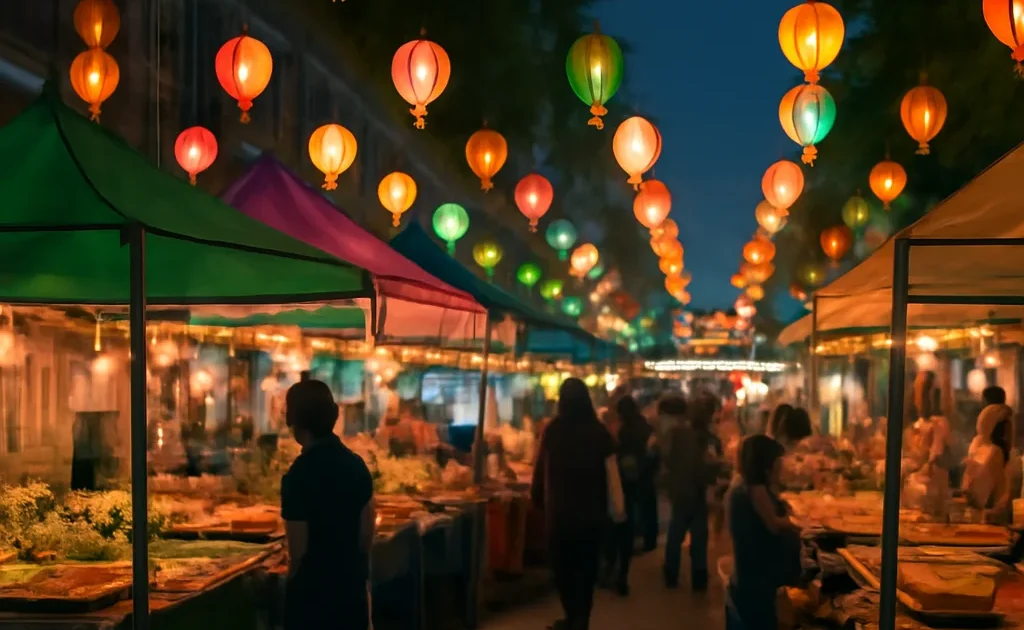
Not all night markets are the same
The “night market” label covers enormous variety in Asia — from Taiwan’s well-organized hawker culture to Thailand’s mixed tourist-and-local affairs to the floating markets of Vietnam. Each country has its own version and understanding which type you’re visiting sets appropriate expectations.
Taiwan: the gold standard
Taiwan’s night markets are the most organized and food-focused in Asia. Shilin and Raohe in Taipei, the Ruifeng Night Market in Kaohsiung — consistent food quality, competitive prices, genuine local culture. These feel like community institutions rather than tourist attractions because they are. NT$50–150 per item, thousands of local visitors nightly.
Thailand: tourist and local coexisting
Bangkok’s Or Tor Kor Market (morning), Chatuchak Weekend Market, and the many provincial night markets (Chiang Mai’s Saturday and Sunday Walking Streets) mix tourist goods with genuine local food. The tourist-facing section is obvious; walk a block off the main drag for the version locals are actually using.
Japan: izakaya alley culture
Japan’s equivalent — Nishiki Market in Kyoto, Tsukiji Outer Market in Tokyo, the countless Ameyoko-style covered shopping streets — have a different character: daytime and early evening primarily, food vendors and specialty shops rather than the late-night eating culture of Southeast Asia.
Vietnam: market culture as daily life
Vietnam’s best markets — Ben Thanh in HCMC, Dong Ba in Hue, the Hoi An covered market — are functioning food and goods markets that operate from 5am through mid-evening. The night market segment is the tourist version; the 6am version is the real thing.
Plan Your Trip
- 🎫 Tours & activities — Klook
- 🏨 Hotels — EconomyBookings
- 🚕 Airport transfer — Welcome Pickups
- 📱 eSIM & SIM card — Airalo
- 🚗 Car & scooter rental — Localrent
- ✈️ Flights — Kiwi.com