The system that makes Bangkok livable
Bangkok’s infamous traffic is real, and the BTS Skytrain is your escape hatch. For any journey between BTS stations, it’s faster than any taxi in any traffic conditions and costs a fraction of the price. Learning to use it fluently transforms a Bangkok trip.
The basics
Two main lines: Sukhumvit Line (runs east-west through the main tourist/expat areas) and Silom Line (runs through the business district, connects at Siam). They share two interchange stations: Siam (the central hub — basically every journey goes through here) and Asok/Sukhumvit (where BTS meets MRT).
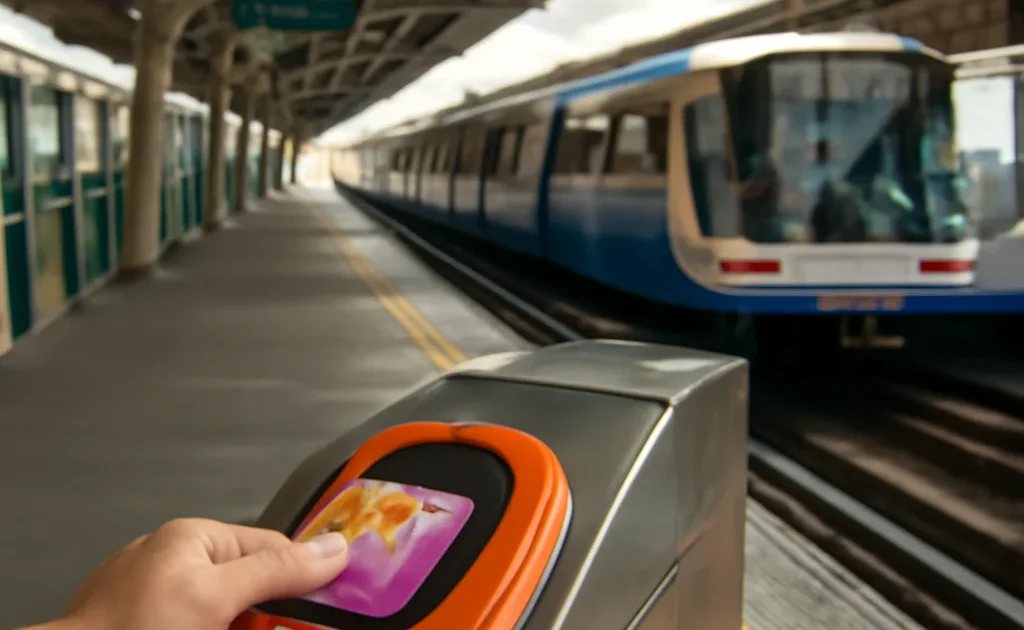
Fares: ฿16–59 depending on distance. You can buy single-journey tokens at machines, but a Rabbit Card (similar to Japan’s Suica) is far more convenient — load it with credit and tap in/out. Available at any BTS station for ฿100 (includes ฿30 credit).
Rabbit Card: get one on day one
I always buy a Rabbit Card when I arrive in Bangkok. It also works at some 7-Elevens and Tops supermarkets. You’ll use the BTS every day — having to queue for tokens each time is maddening when a card handles it instantly.
Operating hours
6am to midnight approximately. Night owls: the last BTS back matters. Check the schedule board at your departure station — the last trains come earlier on some extensions.
The gap problem
The BTS doesn’t cover all of Bangkok. Old Town, the river area, Chatuchak market area, and most of the eastern suburbs require bus, MRT, or taxi. For comprehensive coverage, use both BTS and MRT and fill gaps with Grab.
Google Maps handles BTS/MRT navigation perfectly — use transit mode and it’ll tell you exactly which stations and where to change.
Plan Your Trip
- 🎫 Tours & activities — Klook
- 🏨 Hotels — EconomyBookings
- 🚕 Airport transfer — Welcome Pickups
- 📱 eSIM & SIM card — Airalo
- 🚗 Car & scooter rental — Localrent
- ✈️ Flights — Kiwi.com