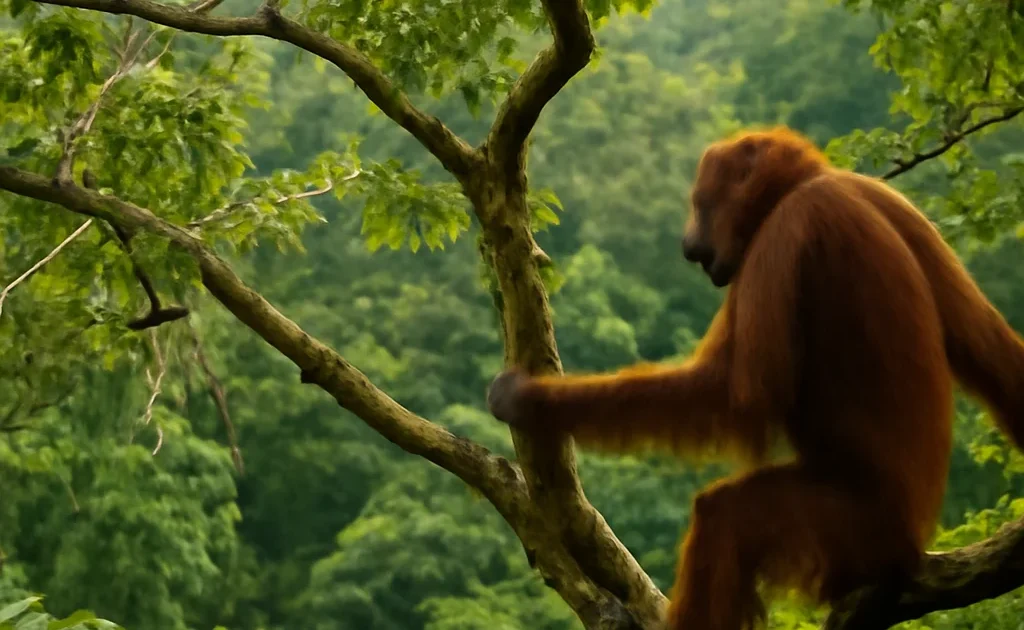
One of the world’s great wildlife experiences
Borneo’s orangutans are the world’s largest arboreal mammals — critically endangered, found only in Borneo and Sumatra. Watching a wild orangutan move through the forest canopy is one of those wildlife experiences that reorients your sense of what’s worth preserving. Here’s how to see them responsibly.
Where to go
Sepilok Orangutan Rehabilitation Centre (Sabah, Malaysian Borneo): The most accessible option — wild and semi-wild orangutans that have been rehabilitated are fed twice daily at a jungle platform. You’re not watching truly wild animals, but the forest setting and proximity are extraordinary. Combines well with the nearby Bornean Sun Bear Conservation Centre. Entry: RM 30 for foreigners.
Kinabatangan River (Sabah): Riverboat trips past the forest see genuinely wild orangutans foraging. Also: proboscis monkeys, pygmy elephants, and hornbills. 2-night river lodge programs from RM 400–800/person are standard. The most atmospheric option.
Tanjung Puting National Park (Kalimantan, Indonesian Borneo): The most remote and most wildlife-dense option. Klotok (river houseboat) trips over 3–5 days on the Sekonyer River pass through primary forest with frequent wild orangutan sightings. $150–300/day per klotok (boats hold 4–6 people). Requires more planning but produces the most extraordinary wildlife encounter.
Responsible watching
Stay at least 7 meters from orangutans. Don’t offer food. Don’t use flash photography. Choose tour operators who follow WWF orangutan welfare guidelines. The presence of tourists at these sites contributes to conservation funding — your visit, done responsibly, helps.
Plan Your Trip
- 🎫 Tours & activities — Klook
- 🏨 Hotels — EconomyBookings
- 🚕 Airport transfer — Welcome Pickups
- 📱 eSIM & SIM card — Airalo
- 🚗 Car & scooter rental — Localrent
- ✈️ Flights — Kiwi.com