The freedom is real, so is the risk
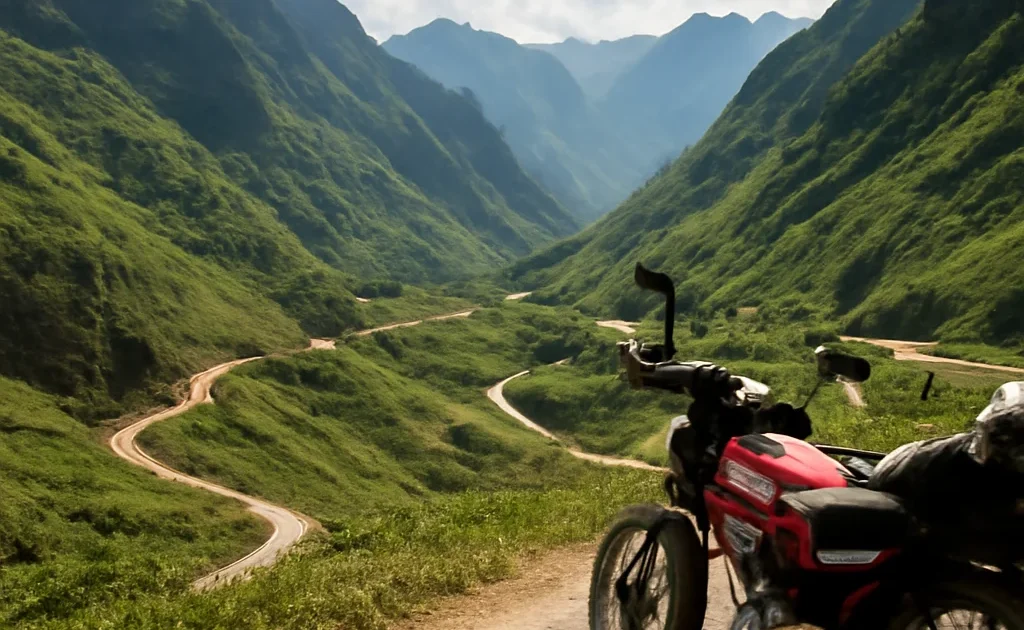
Traveling Vietnam by motorbike is genuinely one of the great ways to see the country — mountain passes, coastal roads, village tracks that no bus reaches. I’ve done the Hai Van Pass, the road to Sapa, and back roads through the central highlands, and these are among my best Vietnam memories. I’d also be lying if I said there was no risk involved.
Vietnam has one of Southeast Asia’s highest road fatality rates. The traffic in cities is genuinely chaotic. The roads in rural areas can be unpredictable. This doesn’t mean you shouldn’t ride — it means you should be honest with yourself about your skill level before committing.
Where motorbike travel makes the most sense
Rural central and northern Vietnam — the countryside between Hue and Da Nang, the mountain roads of Ha Giang province in the far north, the back roads of Ninh Binh. These routes have less traffic, better roads for the scenery, and distances that are appropriate for day riding. Cities are harder — Hanoi and HCMC traffic requires confidence and local knowledge.
The rental reality
Semi-automatic 110cc Honda Win: 100,000–150,000 VND/day (older, character-filled but mechanically variable). Automatic scooter: 120,000–180,000 VND/day (easier to ride, more reliable). Manual geared bike: better for mountain roads, requires experience. Inspect the bike carefully before taking it and photograph any existing damage. Passport is sometimes requested as deposit — try to leave cash instead. — book via Kiwi.com for the best deal.
The Easy Rider alternative
Hiring an Easy Rider (a local driver on their motorbike, you ride behind) gives you the same scenery without the riding responsibility. Popular in Hoi An, Da Lat, and Hue. $30–60/day depending on route. Excellent guides, no risk, genuinely good conversations on long rides.
Plan Your Trip
- 🎫 Tours & activities — Klook
- 🏨 Hotels — EconomyBookings
- 🚕 Airport transfer — Welcome Pickups
- 📱 eSIM & SIM card — Airalo
- 🚗 Car & scooter rental — Localrent