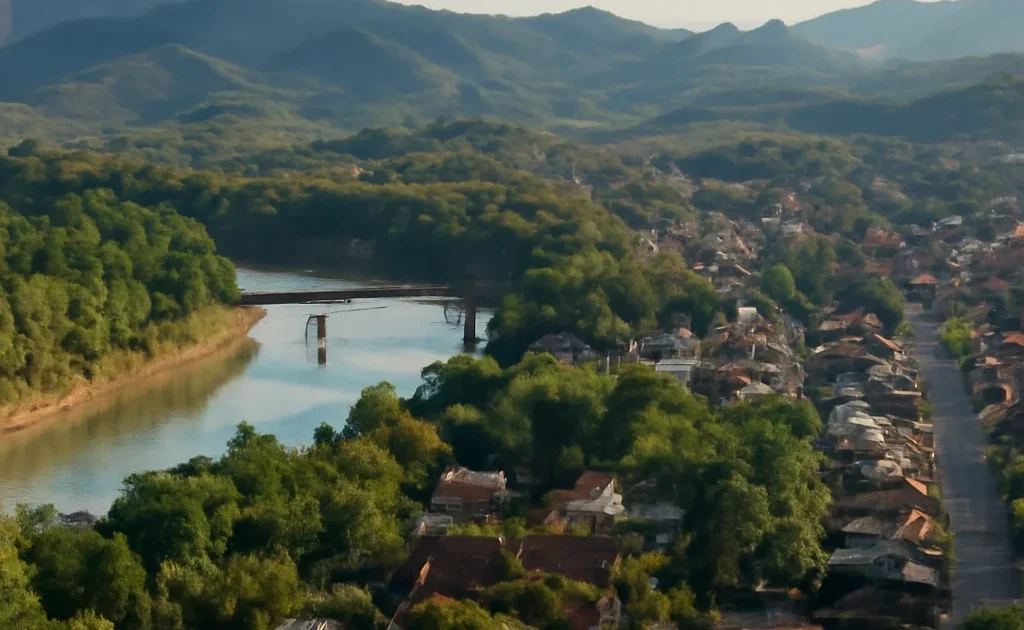
The most atmospheric small city in Southeast Asia
Luang Prabang sits at the confluence of the Mekong and Nam Khan rivers — a peninsula of gilded temples, French colonial shophouses, and centuries of Buddhist scholarship that’s been declared a UNESCO World Heritage city. It’s the place that makes you understand what “preserved” really means when a city doesn’t have highways cutting through it and the evening pace drops to genuine quiet.
The monks and the alms ceremony
At dawn each morning — typically 5:30–6:30am depending on the season — hundreds of saffron-robed monks walk in procession through the city streets collecting alms (sticky rice) from locals. It’s one of the most striking dawn rituals in Southeast Asia. The tourist management around this ceremony has become a problem — aggressive photographers and disrespectful observers have led to some monks changing their routes. If you watch: stand back, be silent, and don’t use flash photography. Buying alms to offer is possible but the commercial alms food is often nutritionally poor — support the ceremony by observing it respectfully.
The temples
Luang Prabang has 34 Buddhist temples in a city of 50,000 people. Wat Xieng Thong is the most beautiful — intricate mosaics and distinctive low-sweeping roofs. Wat Mai Suwannaphumaham has a gilded relief facade that’s extraordinary in morning light. Most temples charge LAK 20,000–30,000 ($1–1.50) entry.
Kuang Si Falls
30km outside Luang Prabang, a series of turquoise tiered waterfalls through a forested canyon with swimming possible in the lower pools. LAK 20,000 entry ($1). Combine with the nearby bear rescue sanctuary. Take a tuk-tuk from town for LAK 100,000–150,000 return. This is the essential Luang Prabang day trip.
Plan Your Trip
- 🎫 Tours & activities — Klook
- 🏨 Hotels — EconomyBookings
- 🚕 Airport transfer — Welcome Pickups
- 📱 eSIM & SIM card — Airalo
- 🚗 Car & scooter rental — Localrent
- ✈️ Flights — Kiwi.com