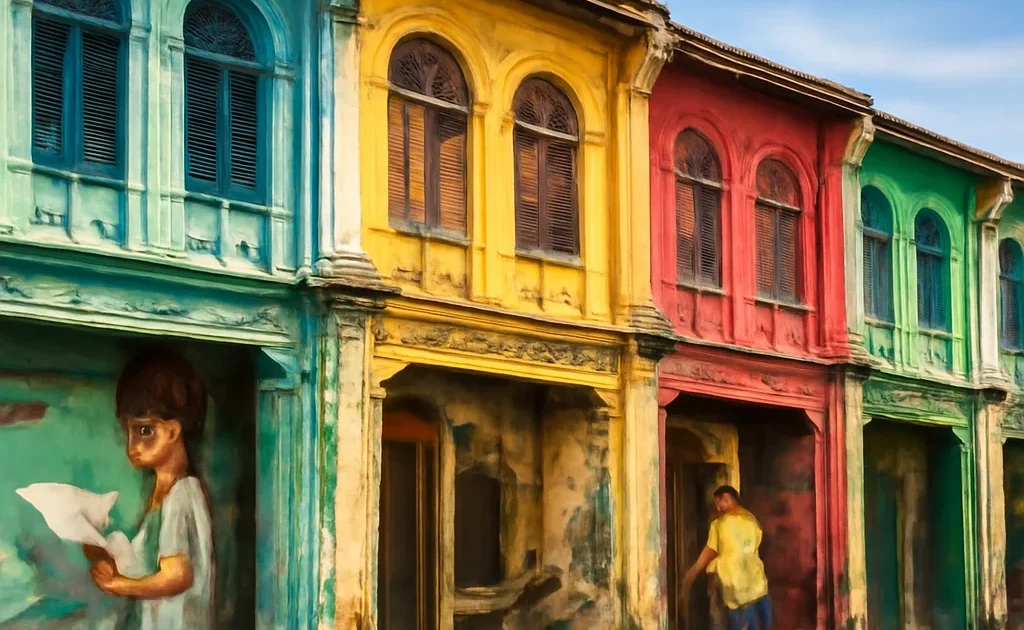
The street art is famous. The food is the reason.
Penang’s George Town became internationally known for its street art murals in 2012 — genuine artworks embedded in the heritage shophouse streets of the UNESCO World Heritage city. The murals are worth finding. But the reason I’ve returned to Penang three times isn’t the murals — it’s the food.
Penang’s food claim
Penang is consistently cited by food writers and chefs as one of the world’s great food destinations. This isn’t marketing — it’s the result of three distinct food cultures (Chinese, Malay, Indian) having developed alongside each other for 200 years, producing dishes that exist only here. Char kway teow (stir-fried flat noodles), assam laksa (sour fish-based noodle soup), cendol (pandan jelly dessert), and nasi kandar (rice with curry curries) are all either from Penang or done best here.
Where to eat
Gurney Drive Hawker Centre: evening hawker stalls on the seafront, everything from RM 5–12 per dish. The char kway teow here is legendary. New Lane Hawker Centre (Lorong Baru): local lunch spot for excellent prawn noodles. Chowrasta Market: morning market for dim sum, popiah (fresh spring rolls), and oh chien (oyster omelette).
The heritage city
George Town’s UNESCO core is a genuinely charming urban streetscape — Armenian Street for murals and boutique guesthouses, Beach Street’s colonial banking buildings, the clan jetties on the waterfront where descendants of 19th-century Chinese migrants still live in stilt houses. Half a day is enough to absorb it; a full day is better.
Plan Your Trip
- 🎫 Tours & activities — Klook
- 🏨 Hotels — EconomyBookings
- 🚕 Airport transfer — Welcome Pickups
- 📱 eSIM & SIM card — Airalo
- 🚗 Car & scooter rental — Localrent
- ✈️ Flights — Kiwi.com