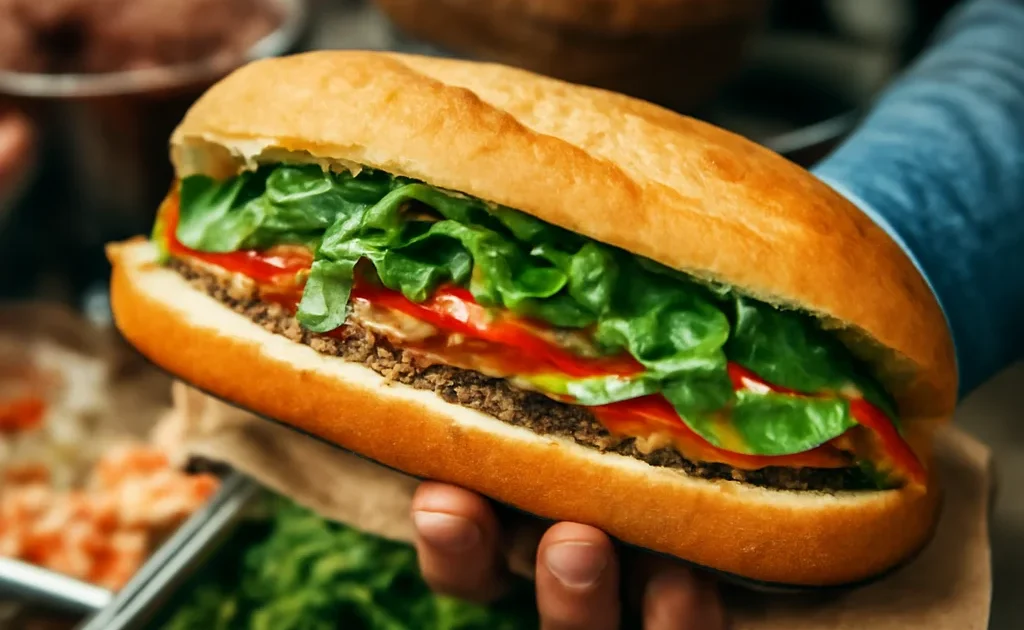
The greatest portable food invention
Banh mi is the happy accident of French colonialism — a Vietnamese adaptation of the baguette that ended up being better than the original. The light, airy baguette (softer inside than French bread, perfect for stuffing) is the vessel. What goes inside defines each regional style and each vendor’s approach.
The anatomy of a good banh mi
The bread: the right banh mi roll is crispy outside and almost hollow inside — a thin crust shell. Too dense and it’s wrong. The pate: a liver pate spread inside the bread, giving richness. The protein: typically ham (cha lua, Vietnamese steamed pork), headcheese, or grilled meat. The pickles: julienned daikon and carrot, sweet-sour pickled — essential for crunch and acid. The fresh elements: cilantro, cucumber, jalapeño. The sauce: mayonnaise, maggi seasoning, or house sauce depending on the vendor.
Regional variations
HCMC style: more fillings, more sauce, larger. Hoi An style: smaller roll, simpler fillings, chicken version (banh mi ga) is famous. Hanoi style: often served open-faced with pate and a fried egg. Each is correct.
Where to find the best
Huynh Hoa in HCMC (Le Thi Rieng Street, District 1): widely considered Vietnam’s best. Queue, always worth it. 45,000 VND.
Banh Mi Phuong in Hoi An (Phan Chau Trinh Street): the famous one, frequently written up, genuinely excellent. 35,000–45,000 VND.
Any street vendor in any Vietnamese city with a line of local customers at 7am: always good, probably also 25,000 VND.
Plan Your Trip
- 🎫 Tours & activities — Klook
- 🏨 Hotels — EconomyBookings
- 🚕 Airport transfer — Welcome Pickups
- 📱 eSIM & SIM card — Airalo
- 🚗 Car & scooter rental — Localrent
- ✈️ Flights — Kiwi.com