The preparation gap is real
I met a lot of people on the Annapurna Circuit who were underprepared — not for the physical challenge (that part people research), but for the logistics, the altitude, and the mental aspects of multi-day high-altitude trekking. Here’s what I’d tell someone before their first Nepal trek.
Altitude sickness is not optional to understand
Above 3,000m, altitude sickness (AMS — Acute Mountain Sickness) is a genuine risk regardless of fitness level. You can be an elite athlete and still get badly ill if you ascend too quickly. The rule: acclimatize at 3,500m for at least a day before going higher, never ascend more than 300–400m of sleeping elevation per day above 3,000m, and descend immediately if symptoms worsen. Diamox (acetazolamide) helps some people — discuss with a doctor before the trek.
Trekking permits
TIMS card (Trekkers’ Information Management System): NPR 2,000 for SAARC nationals, NPR 2,000 ($15) for others, required for all trekking areas.
National Park/Conservation Area permit: Annapurna Conservation Area permit (ACAP) NPR 3,000 ($22); Sagarmatha National Park (Everest Base Camp) permit NPR 3,000. Buy both at the Nepal Tourism Board office in Kathmandu or Pokhara before starting.
Restricted area trekking (Mustang, Dolpo): separate, more expensive permits required.
The teahouse system
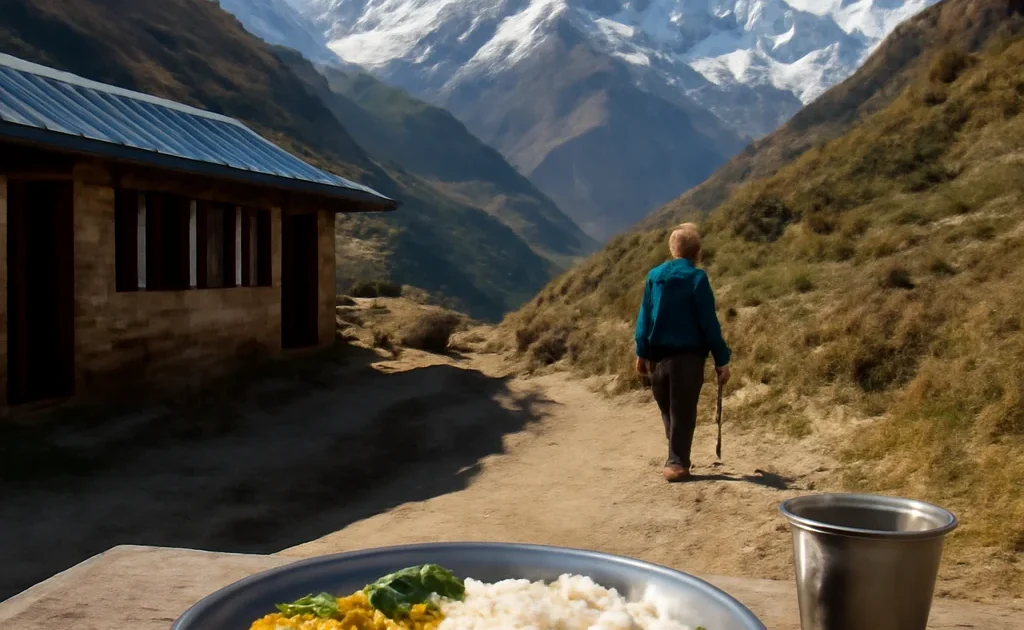
Nepal’s main trekking routes have teahouses (guesthouses) throughout — you don’t need to carry a tent or sleeping bag for most popular routes. Rooms are basic but adequate: NPR 400–1,500/night depending on altitude and season. Meals at teahouses: NPR 300–700 per dish. The dal bhat (lentil rice with curry) is unlimited refills and is what most trekkers eat twice a day.
Plan Your Trip
- 🎫 Tours & activities — Klook
- 🏨 Hotels — EconomyBookings
- 🚕 Airport transfer — Welcome Pickups
- 📱 eSIM & SIM card — Airalo
- 🚗 Car & scooter rental — Localrent
- ✈️ Flights — Kiwi.com