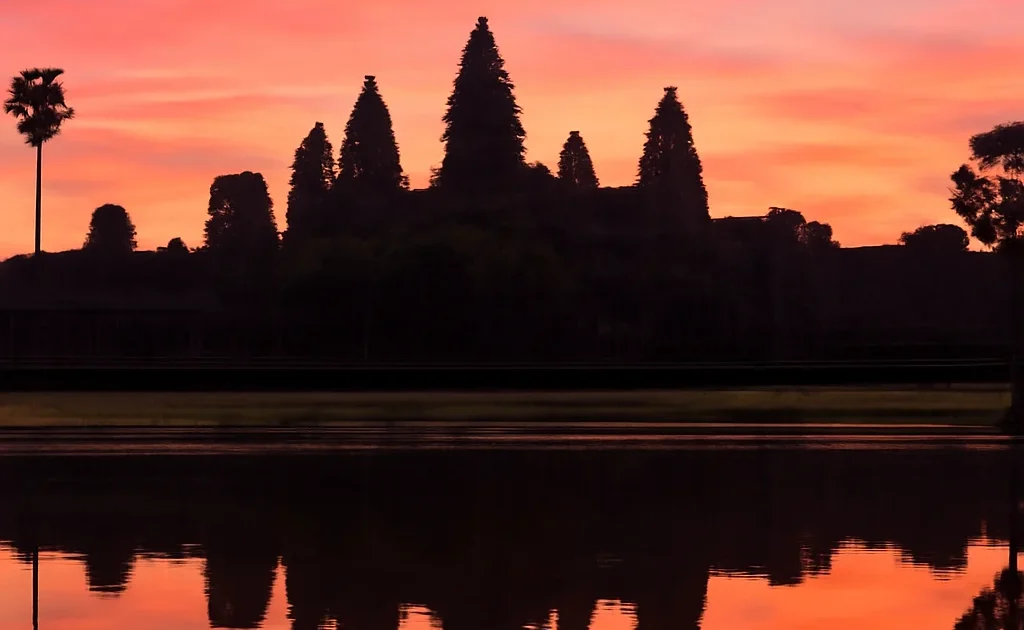
The photographs don’t prepare you for the scale
I’d seen Angkor Wat in photographs hundreds of times before visiting. Standing in front of it for the first time, I still wasn’t prepared for the reality of a 12th-century temple complex covering 400 square kilometers — larger than medieval Paris. The architecture is extraordinary. The history is complex and fascinating. And with some planning, it’s possible to experience it with far fewer crowds than you might expect.
The ticket situation
Angkor Archaeological Park pass is required: 1-day $37, 3-day $62, 7-day $72. Buy at the official ticket center (not from any other source) before entering. The 3-day pass is what most visitors should get — one day is not enough to see what’s worth seeing, and the 3-day gives you time to pace yourself.
The main temples
Angkor Wat: the central temple, sunrise views with the reflection pool, and the inner gallery bas-reliefs (1,200 meters of stone carvings depicting Hindu mythology). Come at 5:30am for sunrise, leave by 8am before tour groups arrive.
Angkor Thom / Bayon: the city complex with 216 stone faces on the towers — more atmospheric and less crowded than Angkor Wat, best in afternoon light.
Ta Prohm: the “Jungle Temple” famously covered in banyan tree roots. Yes, it’s the Lara Croft one. Worth seeing despite the crowds.
Getting around
Tuk-tuk drivers in Siem Reap offer day tours to the temples — $15–25/day for a driver who knows the complex, waits while you explore, and covers the standard circuit. Better value than bicycle for the distances involved in hot weather. Book through your guesthouse for vetted drivers. — book via Klook for the best deal.
Plan Your Trip
- 🎫 Tours & activities — KKday
- 🏨 Hotels — EconomyBookings
- 🚕 Airport transfer — Welcome Pickups
- 📱 eSIM & SIM card — Airalo
- 🚗 Car & scooter rental — Localrent
- ✈️ Flights — Kiwi.com